Tuesday, February 20, 2007

genealogy

Cien años coverGabriel García Márquez's Cien años de soledad is a long, sprawling novel that lacks much in the way of a conventional plot. Rather, it is full of events and incidents, digressions and flashbacks or flashforwards, not least the famous flashforward with which the book opens:
Many years later, as he faced the firing squad, Colonel Aureliano Buendía was to remember that distant afternoon when his father took him to discover ice. (9)
In fact, in a further complication, this is a double flashforward: both to the story of the discovery of ice, recounted some twenty pages later; and to the story of Aureliano Buendía facing the firing squad, which will not be told for another several hundred pages.

But what does appear even in this opening sentence is one of the threads that connects and gives some sense to what might otherwise appear to be a jumble of narrative excess. For in what we take to be his final moments, by recalling the transmission of knowledge from father to son the colonel also highlights the theme of inheritance, of what is passed down from generation to generation. In short, of genealogy.

family tree
For there's no surprise that some editions of the novel include a family tree. Cien años de soledad is (among other things) a family saga. One of its central concerns is they ways in which sons and daughters, grandsons and grand-daughters, and even great-grandsons and great-grand-daughters, have, face up to, take responsibility for, or negotiate what they have inherited from their forebears.

Still early on in the novel, for instance, we see how José Arcadio Buendía (Aureliano's father) destroys or uses up his wife's inheritance--a trove of colonial gold coins previously buried under the matrimonial bed (11)--in his misguided zeal for alchemical progress.

Equally, José Arcadio and his wife, Úrsula, fear that their very marriage may set trouble in store for their offspring. In that they are cousins, and they have heard that other cousins in the family who married gave birth to a child with a pig's tail, they fear their children will likewise be monstrous. For months after their wedding, Úrsula refuses to allow the relationship to be consummated, out of fear for what might issue. They only start to reproduce after a neighbour, Prudencio Aguilar, mocks José Arcadio for his failure to bed his own wife. "If you bear iguanas, we'll raise iguanas," José Arcadio tells her.

Yet indirectly the future has already been set for the couple's descendants. Spurred in defence of his honour to kill Prudencio Aguilar, José Arcadio has as a result to take Úrsula off in the founding Exodus that establishes the community of Macondo.

So Macondo is troubled from the start by the question of inheritance, of legitimacy, and the ways in which the sins of the fathers (and mothers) may be visited upon the sons (and daughters).

In other words, the novel is also troubled from the start by the ways in which, whether through incest or adultery or any number of other complications, the family tree soon becomes as unruly a structure as the narrative profusion that it is in part designed to contain and control.

Genealogy, intended to produce order and secure legitimate inheritance, is equally a source of disorder and confusion as Aureliano follows Arcadio but is followed in turn by other Arcadios and other Aurelianos. It becomes increasingly hard to keep up. The family tree is soon lost to the multitudinous forest.

Tuesday, February 13, 2007

doll

life-size dollFelisberto Hernández's short story "Las Hortensias" explores an uncanny modernity of couples and doubles and life-like mass reproduction.

The story centres around a childless couple, Horacio and María, who live in a suburban house next to a factory whose machinic hum pervades their lives and the narrative. Partly perhaps as a substitute for the child that they cannot have (44), and also (we're told) partly because of his fears of mortality and particularly of the possibility his wife might pre-decease him (20), Horacio acquires a collection of life-size dolls that he has arranged in a series of tableaux vivants.

But one doll in particular becomes rapidly an object of obsession for them both. This is Hortensia, made in the likeness of his wife (whose middle name is Hortensia), who stands in for wife, child, sister, and increasingly Horacio's lover.

At the outset María colludes in the imaginative play with which Horacio gives life to Hortensia. But there's something slightly sinister about the "surprises" she likes to play on her husband by switching roles with the doll, dressing her in her own clothing and providing her with animate qualities at the same time as she herself takes on increasingly doll-like roles. Soon collusion turns to jealousy as Horacio takes this simulation a stage further, having Hortensia fitted with veins through which warm water can be piped for additional verosimilitude, and fixing his desire ever more firmly on the mannequin.

Meanwhile, other doubles are equally troubling: for instance, the household's servants include a pair of twins, one of whom is also named María, whom María (the wife) feels she has to hide from her husband's gaze; and the couple keep the mirrors in their house shrouded, as their reflections provoke anxiety in Horacio however much he also "very much liked to discover the confusion of people and things that mirrors provoked" (51). There's a sense from the start that such reflections and imitations are always likely to get out of hand, and to lead towards madness. Horacio feels himself surrounded by disturbing signs, above all the sense that "the dolls had their secrets," that they are "full of omens," and that they appeared to be "hypnotized beings carrying out unknown missions or lending themselves to unsavoury designs" (22).

More substitutions follow: María attacks Hortensia, though the couple both worry about the notion that a doll, supposedly inanimate, could be "killed." Then Horacio swaps Hortensia first for a blonde doll and ultimately for a black one who turns out to be his wife, providing him with yet another of her surprises.

Unable or unwilling to trust his own senses, and with the feeling that his desire has become delirious (increasingly [un]fixed on part objects--the dolls' detached limbs floating in a tank), Horacio himself becomes ever more of an automaton: he scarcely moves, "his eyes fixed as though they were glass, his silence that of a doll" (77). In a final breakdown, in terror at one last surprise on the part of his wife, one last substitution in which she plays the part of a doll, we find him setting off across the flowerbeds "heading towards the sound of the machines" (80).

Horacio has definitively abandoned human reproduction centered around the closed world of the domestic couple, to ally himself with the infinitely more productive (if also more disturbing) world of the factory. In the proliferation of representations that modernity allows, any distance between sign and thing has (for him) broken down. So why not enter fully into the world of things, abandoning pretensions to puppet mastery, to some kind of transcendent humanity?

Monday, February 12, 2007

wedding

There's so much that could be said about this photograph, winner of the World Press Photo prize for portraiture. The expressions on the couple's faces; the distinct ways in which they hold themselves. And then there's the caption...

Iraq wedding portrait
"Wounded US Marine returns home from Iraq to marry"
via Interbreeding.

[Update: More, from Majikthise, including links to the full gallery of pictures, and the comment "The groom's ambiguous expression is a metaphor for the all the ways that war changes people. [. . .] Maybe the Marine is literally a different person than his finacee agreed to marry."]

Sunday, February 11, 2007

transport

desertThe guiding metaphor and plot device for Coelho's The Alchemist is the journey or quest. Shepherd boy Santiago is told he has to voyage to the Egyptian pyramids in pursuit of his Personal Legend and to discover a treasure that awaits him there. But at the same time, this journey is a red herring: upon finally arriving at the Pyramids he realizes that in fact the treasure is to be found right back where he started, buried underneath the ruined church in southern Spain in which we first found him.

Of course, there's a touch here of Eliot's sentiments in the Four Quartets:
We shall not cease from exploration
And the end of all our exploring
Will be to arrive where we started
And know the place for the first time.
But I think there's more to it than that, something specifically associated with the pleasures of the middlebrow.

Because I'm struck also by how many of those who report to have liked The Alchemist associate it with travel. Take Ashea's account, for instance:
The first time I read it was in a hammock, in the rainforest in Guatemala with an overfed Spider monkey in my lap (long story but I assure you its true) and the second time while backpacking through Cambodia
and Gillian's response: "That's cool that you read it while you were also travelling, I bet that would totally make a difference." And I'm sure it would, not merely because this is "beach" literature. Rather because this is a literature of transport.

Jan Radway in A Feeling for Books outlines the system of evaluation for middlebrow literature precisely in these terms: a book is valued if it provides "a feeling of transport and betweenness, a feeling of being suspended between the self and the world, a state where the one flowed imperceptibly into the other, a place where clear boundaries and limits were obscured" (117). Surely sitting in a hammock with a monkey in your lap is also a pretty good approximation of precisely this same suspension between self and world. The exoticism of Coelho's frankly Orientalist vision is a good fit with the common desire of backpackers to find themselves by losing themselves a little bit, by resituating themselves (ourselves) in a slightly overwhelming, slightly intoxicating environment of (more or less) manageable difference.

Yet this desire to lose yourself or be carried away by literature is very different from the instincts inculcated in academic and professional analysis. As Radway points out, however much recent theory has celebrated the "pleasure of the text", still "academic professionals tend to construe the reading process as one marked explicitly by labor" (108); the "standard practice in English [but, I'd add, not only English] education seem[s] to dictate disapproval of this sort of readerly absorption in supposedly bad books" (121).

Radway describes the middlebrow (exemplified for her by the Book of the Month club) as caught between these twin desires, as a search for "hybrid books" that combine both "education and sensual pleasure" (113). And surely The Alchemist sets out to be hybrid in precisely this way: providing both the pleasure of the quest, an absorption in difference and transport to different worlds, and also a claim to educate, to facilitate self-help.

More generally, Bad Latin American literature (which I'm increasingly tempted to suggest is almost all Latin American literature in translation) finds its niche in this precarious middlebrow compromise between delight and instruction. Is it to be condemned for never quite living up to its literary pretensions, or to be praised for providing both pleasures (the sensual and the intellectual), if always in attenuated form?

Saturday, February 10, 2007

literal

Como agua para chocolate coverLaura Esquivel's Como agua para chocolate (Like Water for Chocolate) presents itself as a fusion of cookbook and novel. Each of its twelve chapters opens with a list of ingredients and the instructions for making a given dish: Tortas de navidad, Pastel Chabela, Codornices en pétalos de rosas, and so on. But it's hard to tell how seriously these recipes are to be taken, and soon enough the cookbook discourse is replaced by a novelistic account of the lives and loves of a Mexican family in the early twentieth century.

To use the appropriate culinary metaphor, the brief snippets of recipe are mere stylistic garnish; they provide the decorative fiction that this book is in fact (as its narrator suggests in its closing pages) a cookbook that has been handed down from great-aunt to great-niece, and that contains "this love story embedded in it" (247).

Yet the relationship between food and life, food and love, is central to the novel. Tita, the protagonist, is born and brought up in the kitchen, and it's to cooking that she turns when she seeks solace or refuge, or to express herself and vent her emotions. Hence the food that she serves, and the recipes that the book contains, are an extension of her personality and her primary means of relating with the world, with often dramatic effects.

For Tita has been prohibited other social outlets. By family tradition, the last-born daughter is condemned to remain at home, and is to dedicate herself to serving the widowed mother in all her whims and demands. Tita is therefore unable to wed her sweetheart, Pedro, who promptly decides that the next best thing is to take up with his beloved's elder sister, Rosaura. Insult added to injury, Pedro's marriage to Rosaura leaves Tita feeling "like the quail" that she herself is cooking: "broken in body and soul" (48).

The book's dominant trope consists in such comparisons: on hearing of her sister's marriage, Tita's cheeks burn red "like the color of the apples in front of her" on the kitchen table (13); seeing Pedro, she "understood exactly what the dough for a doughnut must feel on its contact with the boiling oil" (15); later, "like the saying goes, her skin turned to goose bumps" (24); she feels as abandoned as "a chile en nogada left behind on a tray after a banquet" (57); put to looking after her nephew, she ensures he is "wrapped up like a taco" (74); she leaves home but without words "to express what was cooking inside her" (108); on her mother's death, she feels "fresh like a lettuce" (137); and when Pedro does embrace her, "her body shook like jelly" (140).

Indeed, it's a simile that gives the book its title. We're told that, angry at the prospect that her niece will have to bear a similar burden of looking after her own mother, "Tita was literally 'like water for chocolate'" (151).

Tita's not, of course, literally "like water for chocolate" (a Mexican expression meaning "at boiling point"). But there's something revealing about this mistake: Esquivel's book consistently literalizes the figurative comparisons upon which it depends. Its drive is to join cooking and life so completely that there should be no distance between the two. And it's this fear of figuration that subtends Esquivel's brand of magical realism.

So it's not good enough to suggest that Tita is so embroiled in the world of the kitchen that it's as though she had been born there: she has to be literally born among the pots and pans, "among the vapours of a noodle soup that was on the boil" (4). And as a premonition of the obstacles that her life will face, it's not sufficient that the tears that attend her birth should be metaphorical: they have to be an "overwhelming torrent [. . .] that washed over the table and the kitchen floor" (4). And so on for another 250 pages.

Como agua para chocolate proceeds by means of a stubborn literalization of emotion. If a dinner is made "with love," it has to be literally infused by the blood of the enamoured, and then to produce immediately physical symptoms in those who consume it. Passion has to make itself evident in lights, sounds, and smells. Arguments must be literally to the death, as characters die of flatulence, their disgust made flesh.

This is a cartoon world in which nothing can go without saying; everything has to be spelled out and embodied, made sensual and tactile. All of which is well and good in some ways. But doesn't it show a basic misunderstanding of the ways in which literature works? And isn't it an irony that a genre celebrated for its creativity turns in the end on an inability to leave anything to the imagination?

Wednesday, February 07, 2007

askance

Marta BrunetMarta Brunet's "Piedra callada" is a chilling little tale of long-guarded resentment, terse conversation, and sudden violence; it's reminiscent somewhat of a Flannery O'Connor short story, but with southern Chile standing in for the US Deep South. Two implacable wills face off against each other: the mother, Eufrasia, who has opposed from the start her daughter's marriage to a lowly, sullen peon; and the son-in-law, Bernabé, who refuses to be parted from his children following his wife's death.

Or rather, this is not so much a "face off" as the mother knows that to get her way she might have to proceed "by short cuts, clambering around, biding her time, if the direct route was made arduous and full of obstacles" (39). Hence she is consistently seen only in profile (e.g. 46, 54, 60, 64) as she half turns away, seeking to slip to one side or another, looking askance at her surroundings: "The old woman, always turned to one side [siempre de perfil], observed [Bernabé] out of the corner of her eye" (59).

There is something aslant or crooked also about the son-in-law: his eyes, for instance (40), and he too takes in the changes Eufrasia has wrought by looking at them only indirectly (49). But his characteristic movements are less from side to side than up and down. In the presence of hacendado and mother-in-law alike he hangs his head, slouching as though admitting defeat ahead of time (40, 58). And when his ill-named wife Esperanza ("Hope") dies, it's "as though his head had all of a sudden buried itself in his shoulders" (50).

Increasingly, Bernabé's anger literally swells up from deep within his body, his arms, his hands. But it's not for nothing that even Esperanza, pleading to be allowed to marry him, has to admit that he's clumsy, heavy, slow-witted [lerdo] (36, 37). Eufrasia by contrast is "prodigiously agile, quicker in thought than he" and also quicker to move: she "side-step[s] immediately," leaving him behind when threatened (60).

Neither of these two rivals is distinguished by their use of language. Bernabé is taciturn to the point of dumbness, managing only a grunt or two for the most part, and "drowning in words" when he is called upon to say more (62). Eufrasia's silences, by contrast, are part and parcel of the long game that she's playing as she watches and waits for her opportunity to strike.

And when strike she does, it's to force Bernabé likewise to step off to one side: but here this involves his slipping and falling; unlike her, he's lost if he cannot move ahead and straight. Eufrasia wins out (was there ever really any doubt that she would?), though in a chilling final paragraph that reminds us how imperceptible her wayward track has been, she leaves the door open "because as far as the others were concerned, the man might still return" (65).

Monday, February 05, 2007

quiet

Everyone else is doing it (The Anti-Essentialist Conundrum, AngryBrownButch, Truly Outrageous, The Valve, and plenty more), so here's a poem by Pablo Neruda. Specifically, Poem 15 from Veinte poemas de amor y una canción desesperada:

Pablo NerudaMe gustas cuando callas porque estás como ausente,
y me oyes desde lejos, y mi voz no te toca.
Parece que los ojos se te hubieran volado
y parece que un beso te cerrara la boca.

Como todas las cosas están llenas de mi alma
emerges de las cosas, llena del alma mía.
Mariposa de sueño, te pareces a mi alma,
y te pareces a la palabra melancolía.

Me gustas cuando callas y estás como distante.
Y estás como quejándote, mariposa en arrullo.
Y me oyes desde lejos, y mi voz no te alcanza:
déjame que me calle con el silencio tuyo.

Déjame que te hable también con tu silencio
claro como una lámpara, simple como un anillo.
Eres como la noche, callada y constelada.
Tu silencio es de estrella, tan lejano y sencillo.

Me gustas cuando callas porque estás como ausente.
Distante y dolorosa como si hubieras muerto.
Una palabra entonces, una sonrisa bastan.
Y estoy alegre, alegre de que no sea cierto.

[Hear Neruda himself recite it, albeit rather dolefully, here (mp3).]

It's a tough poem to translate (though there are a couple of egregiously bad attempts out there, notably this one, which gets the last line utterly wrong).

Above all, no doubt, there's the question of how to translate "me gustas cuando callas." Among other efforts, I've seen "I like you calm," "I like it when you're quiet," and "I like for you to be still." And callarse does indeed have a range of meanings.

The Collins Spanish Dictionary provides the following: "to keep quiet, be silent, remain silent; (of noise) to stop; to stop talking (or playing etc); to become quiet; (of sea, wind) to become still, be hushed."

The Real Academia Española gives us:

callar. (Del lat. chalāre, bajar, y este del gr. χαλᾶν).
  1. tr. Omitir, no decir algo. U. t. c. prnl.
  2. intr. Dicho de una persona: No hablar, guardar silencio. Calla como un muerto. U. t. c. prnl.
  3. intr. Cesar de hablar. Cuando esto hubo dicho, calló. U. t. c. prnl.
  4. intr. Cesar de llorar, de gritar, de cantar, de tocar un instrumento musical, de meter bulla o ruido. U. t. c. prnl.
  5. intr. Abstenerse de manifestar lo que se siente o se sabe. U. t. c. prnl.
  6. intr. Dicho de ciertos animales: Cesar en sus voces; p. ej., dejar de cantar un pájaro, de ladrar un perro, de croar una rana, etc. U. t. c. prnl.
  7. intr. Dicho del mar, del viento, de un volcán, etc.: Dejar de hacer ruido. U. t. c. prnl. U. m. en leng. poét.
  8. intr. Dicho de un instrumento musical: Cesar de sonar. U. t. c. prnl.

It's clear from both that the word's primary meaning concerns voice or sound, and so only by extension the other senses implied by calmness or stillness. Moreover (as Ashea notes), the range of signification also encompasses, without being limited to, the Spanish equivalent of "shutting up": "¡Cállate!"

At first sight this is a disconcerting image: the poet silencing the woman's voice, or even suggesting that she shut up. Such silencing is a familiarly gendered move, of course, but we'd rarely expect such explicitness, in a love poem at least.

And the image remains disconcerting at second sight, too, because it is the beloved's imagined absence that's celebrated; this appears to be an encomium to distance: "I like you when you're quiet because it's as though you were absent."

Worse still, at third sight, the poet seems also to be delighting in positing the woman's death: "Distant and doleful as though you had died."

Can then it be redeemed--if indeed we should want to "redeem" it--by the final line's ironic twist, "And I'm happy, happy that in fact it's not true"? Perhaps indeed the mistranslation "And I am happy, happy of what, isn't certain" is symptomatic: the poem surely leaves the reader with a shiver of uncertainty. Can Neruda really mean what he's saying?

Yet this is hardly the only poem in the collection that praises the beloved's silence: "Ah silenciosa!" ["Ah, silent woman!"] is Poem 8's refrain. Or compare Poem 14: "Ah déjame recordarte cómo eras entonces, cuando aún no existías" [Ah let me remember you as you were then, when you still did not exist"].

The woman (or women) addressed throughout the twenty poems is always a shadowy figure, however often she is compared to the most concrete and tactile of substances: the earth, for instance, in Poem 1. She hovers perpetually between presence and absence and that, it seems, is how Neruda likes her.

Because in the end what's affirmed her is not the beloved herself, let alone "the real subjectivity of another person" as Joseph Kugelmass argues about a poem (14) that states, of all things, "Since I've loved you, you've seemed like nobody" ["A nadie te pareces desde que yo te amo"].

What's affirmed is the poet's voice. He has "forged" his beloved "like a weapon" ["te forjé como una arma"] (Poem 1), and throughout the collection runs the double sense of this forgery: as both something unreal, insubstantial, untrue; and also a creation that pays homage more to the creator than to to the created. No wonder the final poem resounds with the self-affirmation "I can write" ["Puedo escribir"] (Poem 20).

I can write... I can write... I can write... And Neruda can surely write. There's no question that these are marvellous, beautiful poems, deservedly famous. But we shouldn't perhaps lose sight of the disconcert--and indeed discordance--the shiver of uncertainty induced by the spectral presence of the woman who is invoked only to be despatched, conjured up to be absent even in her presence, excessively haunting but also enabling the master poet find his voice through her silence.

[Meanwhile, Marta Brunet provides a rather different take on subaltern silence--and treachery.]

Saturday, January 27, 2007

Cumandá

Cumanda coverYes, Juan León Mera’s story takes as its title the name of its female protagonist, object of the white man’s desire. Yes, Cumandá is also without doubt the most interesting and most attractive character in this, Ecuador’s first novel. And yes, the book’s plot revolves around first the ill-fated love between Carlos and Cumandá, then the tug-of-war that sees her exchanged between indigenous tribes and demanded back from the white-founded settlement to which she flees, and finally the revelation that in fact she is Julia, Carlos’s younger sister missing since an indigenous uprising many years before.

But Cumandá is a distraction, or at best a pretext for the real interest here. As so often, the traffic in women is important only in so far as it enables and solidifies economic and political relations between men. In Doris Sommer's words, Cumandá becomes "the woman over whose dead body Spanish and Indian fathers can lover each other" (Foundational Fictions 240). For the key relationship in Mera’s novel is that between her father Tongana--who turns out to be the rebel formerly known as Tubón--and Tubón’s master, now missionary, Domingo Orozco, who is Carlos’s father and (we finally discover) also Cumandá’s.

After all, is not the book’s lesson that romantic love (or even sexual desire) fails to unite the two cultures, the indigenous and the creole or European? Not only do Cumandá and Carlos unable to consummate their passion--she has to keep herself untouched until after the festival of the canoes and then all too shortly thereafter is captured before subsequently dying--but even if they had, it would have been an illegitimate, incestuous union. In the end (Mera suggests) desire only brings us back to the same. The romance is doomed, but it would be even worse if it weren’t.

What counts therefore is the mutual forgiveness required of the two fathers. Father Domingo has to forgive Tubón for the uprising that deprived him of his wife and (for so long) of his daughter. Tubón has to forgive Domingo both his former colonial violence and his current neocolonial nation-building. Indeed, Domingo requires Tubón’s forgiveness in order to construct a fiction of brotherhood that will bind the two cultures affectively, if not ideologically.

For in the crucial scene in which Tubón offers up (or is read as offering up) his assent to creole domination, he is mortally wounded. Surly and undemonstrative at the best of times, this indigenous chief is now literally mute. While Carlos irritatedly calls upon his father to seek out and save Cumandá (failing three times, an unhappy inversion of the three occasions on which Cumandá has saved him), Domingo waves him off, concentrating on eliciting some sign of approval from the dying figure of the indigenous patriarch.

Domingo implores Tubón, revealing his dependence upon indigenous pardon for his own salvation: “If you pardon me, then we are both saved” (283). “My brother,” he begs him, “My soul brother!” as he seeks “a sigh, a tear, any sign of repentance” (283). So lo and behold when Tubón “wants to speak but cannot [and] two tears roll down his burning cheeks,” Domingo exclaims “He weeps! [. . .] Tears of salvation! Tears of benediction and proof of eternal health!” (284).

And the reader too is no doubt expected to weep at this scene of high (melo)drama in which the nation’s future health is cemented over a double death: of the white woman sacrificed for her troubling allure; and of the subaltern rebel whose mute affect is to be interpreted as consent within a narrative of reconciliation.

Wednesday, January 24, 2007

legend

The AlchemistBy all rights, Paulo Coelho's The Alchemist should have single-handedly delivered a knock-out blow to any popular conception that Latin American literature is "good" literature. The novel is, simply put, execrable tripe.

At the very least (as I commented earlier), Coelho should have changed our idea of what it is to be a Latin American author: his work is global in almost every sense of the term, from its international success (his website, itself available in sixteen languages, tells us that he "has sold a total of 85 million copies" of his books, 30 million copies of The Alchemist alone, and that he's been translated into 62 languages and published in more than 150 countries) to its settings and themes, which usually have very little to do with Coelho's native Brazil.

But perhaps this is precisely why The Alchemist seems so distinct from any specifically Latin American literary tradition. Though Coelho claims Borges (another global writer, if of another calibre) to be one of his inspirations, The Alchemist has more in common with, say, Saint-Exupéry's The Little Prince or (even more so) Bach's Jonathan Livingston Seagull than with, say, "Pierre Menard, Author of the Quixote" let alone A Hundred Years of Solitude.

Moreover, I'd wager that the market for Coelho and the market for García Márquez, vast as they both are, are also almost entirely distinct: i.e. that those who read the former hardly ever read the latter, or vice versa.

Yet The Alchemist must do something for someone--perhaps even for 85 million someones. Though the moral peddled by this fable of a shepherd boy's voyage to find a treasure he dreams awaits him (be true to your dream, listen to your heart) and even the story's dénouement (the treasure turns out to have been right where the boy started out from all along) are both trite and surely familiar, perhaps they help the book's readers make it through somehow. Coelho's blog invites us to become Warriors of Light as we Walk the Path with him in pursuit of our own "Personal Legends." And as with countless other New Age movements (and this is surely New Age however much it's inflected through Coelho's own Catholicism), such a sense of pilgrimage, both communal and highly individualistic, no doubt compensates for some generalized sense of social anomie.

Indeed, it's striking how much the "Reader's Guide" appended to the HarperCollins edition of the book encourages us to view The Alchemist almost as a devotional text: "questions for discussion" include "can you define your Personal Legend?" and "Having read The Alchemist do you know what inner resources you need to continue the journey?" (173, 174).

In short, we're enjoined to read the fable as "truth" rather than "fiction," perhaps even as anti-literature. And it's tempting to agree that Coelho's work is (in a rather different sense) indeed anti-literary, supremely non-literary. But surely the first premise of any critical account would be to insist on its literary quality: to emphasize that this is indeed literature; bad literature, no doubt, but literature none the less.

Tuesday, January 23, 2007

magical

Mayan jungle sceneThis from Julian Barnes's Flaubert's Parrot, as quoted in Stephen Hart's "Cultural Hybridity, Magical Realism, and the Language of Magic in Paulo Coelho's The Alchemist" (Romance Quarterly 51.4 [Fall 2004]: 304-312):
A quota system is to be introduced on fiction set in South America. The intention is to curb the spread of package-tour baroque and heavy irony. Ah, the propinquity of cheap life and expensive principles, of religion and banditry, or surprising honour and random cruelty. Ah, the daquiri bird which incubates its eggs on the wing: ah the fredonna tree whose roots grow at the tips of its branches, and whose fibres assist the hunchback to impregnate by telepathy the haughty wife of the hacienda owner; ah, the opera house now overgrown by jungle. (104)
Hart wants to revindicate both magical realism and (surprisingly) Paulo Coelho. However, one would have thought that tying Coelho to the magical real would sound that style's death knell.

Still, it's interesting to see a continuity between (what I think Niall rightly identifies as) the kitsch Orientalism of Allende's Eva Luna with the still more portentious fable provided by The Alchemist.

Yet beyond the tired and derivative stylistic quirks that Barnes identifies in magical realism, perhaps at least Coelho has come up with a new way for Latin American literature to be bad.

Sunday, January 21, 2007

tolerable

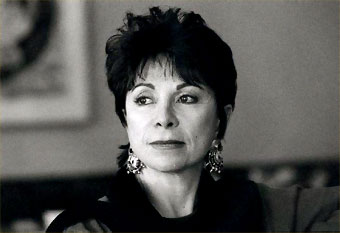
Isabel AllendeIsabel Allende's Eva Luna is perhaps not a terrible book; but nor is it a very good one.

It particularly goes off the rails towards the end as the various narrative strands--the story of eponymous Eva's success as a writer; the long-awaited consummation of her romance with film-maker Rolf Carlé; and her abandonment of previous love interests guerrilla Huberto Naranjo and General Tomoleo Rodríguez--come to an end more or less abruptly and unconvincingly. In this light, Allende's decision to give us two possible conclusions, in one of which Eva and Rolf's love eventually dissipates whereas in the other they live happily ever after, is less a sign of metafictional play than a signal that the book itself has ground to an unceremonious halt.

All this in a book that sets out to celebrate the power of the word, and of story-telling in particular, yet in which (as our narrator tells us) "when all was said and done, everything came down to the elemental fact that I had found my man" (285). All the gestures towards politics, whether feminist or socialist, half-hearted at the best of times, are sacrificed for the sake of a romantic dénouement that even Eva Luna herself finds vaguely unsatisfying.

This sense of dissatisfaction permeates the novel, not least when it comes to the various stories within stories that it presents. Eva Luna gains an audience among her friends by reworking the stories provided her by mass culture: "They'd ask me to tell them what would happen next in the soap opera of the day, and I'd improvise a dramatic conclusion that never coincided with the way things turned out on the radio, but they didn't mind" (121). Yet it emerges that the book we are reading is itself the basis of Eva Luna's own soap opera, one which goes by the title of Bolero; perhaps she's challenging us to come up with a more fitting end to her characters' serial adventures and (mis)fortunes.

If Eva Luna is some kind of doppelganger for Allende herself, it's notable that she is a writer unashamedly oriented towards the market. Throughout, she offers her stories in exchange for some kind of benefit; and as she suggests in the self-reflexive terms of the only story told within the novel itself, "she traveled all over touting her merchandise, adventure stories, mysteries, tales of horror or vice, all at a reasonable price" (262). She makes no grand claims for her fiction, only that in the face of an unknowable and chaotic reality she tries "to put a bit of order to so much chaos, to makes existence more tolerable. When I write, I picture life the way I'd like it to be" (280).

Is it too severe to characterize such sentimental escapism as "bad" literature? Perhaps, though it's notable how deficient it is when Allende (or Eva) comes to account for violence or any other unpleasantness: describing a torture scene, for instance, our narrator tells us "The officer lifted his hand, brought his arm back, and punched me. I don't remember anything else. I awoke in the same room, tied to the chair, alone, they'd taken my dress off. [. . .] I tried to move, but my entire body hurt, above all the cigarette burns on my legs" (183). No wonder Luna's response to another character's bloody suicide has been to clean things up and tell her corpse a story as though (almost) nothing had happened.

And it's an irony if Allende's readership comes to her work looking either for creative imagination or for some kind of political commitment, when all they get are these gestures.

Tuesday, January 16, 2007

cover

There's quite a lot you can judge a book by its cover. A book's cover is a very visible means by which publishers seek to sell their product to readers: indicating what kind of book they're selling, establishing associations to point to a particular market niche.

Isabel Allende's own website has a page featuring all her covers, at least of English translations. There are a variety of designs, though most of them feature cover art that bleeds to the edges. The design for Paula is the simplest, with prominent text imitating handwriting either side of a very small central image. Daughter of Fortune and Portrait in Sepia have covers more suitable to a classic: subdued, neither too busy nor too colourful.

Eva Luna, on the other hand, has a cover dominated by a quasi-modernist painting of a woman's head in close up, in warm but also slightly menacing orange (in which the forehead and background merge), over which the book's title is superimposed in rather clashing green. There seems to be no other text and the overall effect is decidedly garish.

Eva Luna, SpanishHarperCollins (via its Spanish-language imprint Rayo) sells the book in Spanish in the US and Canada with an early twentieth-century sepia photograph and a crescent moon set against a dark brown ground and with a prominent recommendation from the Village Voice right alongside the title itself. Allende's name is more prominent than the title, but only marginally so; beneath is the reminder that she is also the author of La casa de los espíritus This cover is simpler and more tasteful, right down to the use of a lower case sans serif font.

Eva Luna, EnglishIt's Bantam (a mass market division of Random House) that sells the current North American English translation, whose cover depicts a woman writing against a colourful floral background. The type face is more elaborate, reminiscent of art deco, while the artwork itself is fairly interesting: faces lurk in the background; and on the desk at which a woman is writing (though she's looking straight at the viewer) can be found both a sepia photograph of what seems to be an Edwardian woman with parasol, and also a hand grenade. Again, there's something menacing about this cover, especially the woman's somewhat odd gaze, but here perhaps this disconcerting effect is deliberate, rather than accidental.

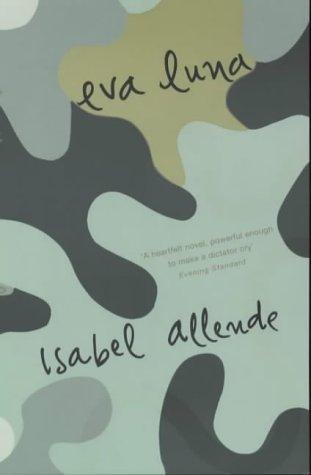
The Penguin (UK) cover picks up on the military theme, but takes it to some extreme: no longer the romantic image or woman's portrait, but an abstract study in camouflage, with a blurb from the Evening Standard placed aslant between title and author's name. I can't but think this is a strange and possibly counter-productive way to sell Allende's work. Maybe the idea is to position her more as an avant-gardist, and to remove all traces of femininity from her image.

Perhaps this is a tension for her publishers: whether to sell her as Virginia Woolf or as Gabriel García Márquez. Likewise, if on a different axis, there seems to be a tension between positioning her as a modernist, experimental writer or as an author of romances (albeit romances with an exotic and politicized edge). Where exactly does she lie on the scale that leads from Barbara Cartland to James Joyce? The truth is, as in so many other things, she's quite squarely in the middle.

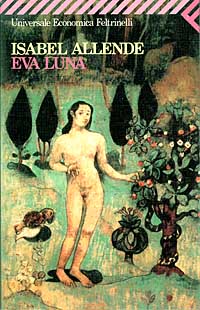
Meanwhile, here is the book in some other languages: Dutch, Czech, and Italian. The Dutch have gone for a fairly plain cover, with a childlike drawing; the Czechs have decided that sultriness is what will sell the story for them. It's not clear what exactly the Italians were thinking.

Eva, DutchEva, CzechEva, Italian

Again, Allende's own website has a page dedicated to covers of translations in a still wider range of languages, from Turkish to Japanese.

Tuesday, January 09, 2007

worst

Here's material for a meme, no doubt: what was the worst book you ever read, and why?

A quick search around the web, however, turns up several lists of notoriously bad films (e.g. Wikipedia's "Films considered the worst ever"), and indeed there's an annual award for bad films, the Razzies, but I can't immediately find anything similar for fiction.

There is the Bad Sex in Fiction Award; and also the Bulwer-Lytton Fiction contest, "wretched writers welcome." But nothing for entire books, so far as I can see.

[Update: I now see that The Observer started such a discussion a couple of years ago, though even in starting the debate Stephanie Merrick (who picks Wuthering Heights) notes that "if favourite books are subjective, nominating the 'worst' books is even more so". The ensuing comments, over 1100 of them, can be found here.]

Of course, a document such as the Vatican's Index librorum prohibitorum tried to establish some theologically-validated consensus on what makes a bad book. But not only is the question of moral danger rather different (if not altogether so) than the issue of aesthetic failure; also even the Vatican eventually gave up any attempt to distinguish between bad and good when it comes to literature.

Perhaps that's because there are just so many more books--and therefore so many more bad books than bad films. There are too many contenders. But perhaps it's because there's much less unanimity on what makes for a bad book than on what makes for a bad film.

Here's my contender for at least one of the worst books I've ever read... and what makes it even worse is that it's a trilogy.

Many years ago a co-worker and friend lent me Robertson Davies's The Cornish Trilogy (which consists of The Rebel Angels, What's Bred In The Bone, and The Lyre of Orpheus), telling me I must read them. And read them, I did; every word. Perhaps my effort to continue through these three thick tomes indicates some kind of masochism. Because almost every sentence I found ponderous, overwrought, and yet strangely banal.

I'm really not sure why I persevered in the effort. Maybe I thought that at some point Davies simply must turn the corner, that things had to improve. But no: the oh so slow trainwreck of language and plot continued inexorably, each sentence and each page as poor as the previous one. The trilogy was long; it was tedious; it was pretentious. And it gave no pay-off whatsoever.

Fortunately, I have repressed almost all memory of the books themselves. I only have the memory of the execrable experience I spent reading them. An experience I would be loath to repeat.

Meanwhile, I now find myself in a land in which Robertson Davies is a literary hero. The Canadian Encyclopedia declares that he is "acknowledged as an outstanding essayist and brilliant novelist". And I should admit that a couple of my other contenders for worst books also emanate from the Great White North--not least Elizabeth Smart's By Grand Central Station I Sat Down and Wept, though that at least has the benefit of a decent title and a commendable brevity.

But I should assure my Canuck hosts that there's no Canada-bashing here: I love the novels of Leonard Cohen and Michael Ondaatje, for instance. But Robertson Davies? Forget about it.

Crossposted to Long Sunday.

Monday, January 08, 2007

family

Literature and the family are intimately connected.

No doubt this is in part because the family is such a fertile source of narrative: stories are handed down from parents and grandparents to children and grandchildren; and also we tell ourselves and each other stories about the family in an effort, perhaps, to understand who we are and where we come from. These familial and familiar stories, for which we now draw on the narratives provided for us by psychoanalysis and culture at large, help to place us, to give us a sense of place. There's something reassuring even (or especially) about a story of troubled family origins. Perhaps it gives us a way out, but at the least a way to cope with and come to terms with ourselves.

There's also something about troubled families in particular that seems to demand a story. Perhaps it's the inherent interest of the "unhappy family," as Tolstoy's famous first line to Anna Karenina suggests. The family serves as something like a primordial site of speculation and gossip, as looks or words or anecdotes are exchanged about more distant relations: uncles and great-aunts, cousins and great-grandfathers.

But in the novel (at least) the family is not only context or source: it is also traditionally motivation or prospective future. Think of Austen's heroines and their search for a fit husband (and so another famous opening line, that of Pride and Prejudice). They're not just about coming to terms with origins, but also about leaving one family and starting up another, and the anxious moments of transition in between, the fear that in leaving the frying pan we are simply jumping into the fire.

So typically novels in end death, birth, or marriage: the end of a lineage, the beginning of another, or the establishment of a tie between lineages.

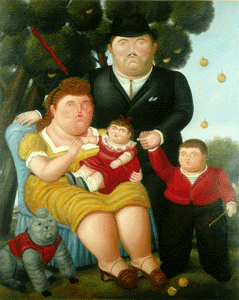
But the family is also a social metaphor for other sites within which identity is constructed, contested, or even broken down. For Latin America this is perhaps especially the case: Doris Sommer has famously argued that the region's foundational fictions are "family romances" in which the fate of the nation is allegorized through the vicissitudes of family plots. No wonder that this heritage should bear also on the literature of the twentieth century, that so many of the great books by which Latin America made its literary name should carry with them family trees, as though the novels themselves were merely commentary on such diagrams of familial interconnection.

Friday, December 22, 2006

prediction

A friend was asked for a prediction for what might happen in Latin America over the next twelve months. This is what I suggested (with a little help from another friend, Eric)...

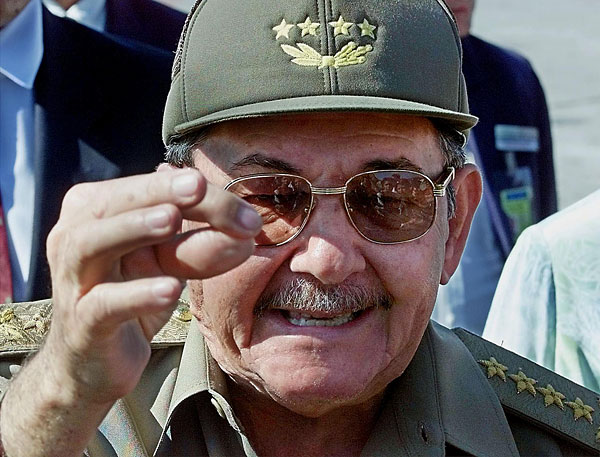
Castro dies. Nothing happens. So some fool Florida gusano tries to assassinate Raúl, but fails. We find out that US special services have helped him out on the sly, and that Cheney's given them the nod. Scandal. Cheney has a heart attack. Bush is impeached. Hillary is the only one with the machine to step in, and so in these exceptional circumstances she becomes president. But the perverse result is that, as the first woman commander-in-chief doesn't want to look soft on defence... she invades Cuba by the end of the year.

Meanwhile, happy holidays and all that.