Showing posts with label subalternity. Show all posts

Thursday, June 28, 2012

Prospero

“Prospero’s Book: On John Beverley's Latinamericanism After 9/11
Gentle breath of yours my sails
Must fill, or else my project fails.
-- The Tempest, Act 5, Epilogue
John Beverley presents himself as the grand old man of Latin American cultural studies. And not without reason. He was there at the outset in the early 1990s, and has figured in almost all of the significant discussions and debates--about testimonio, subalternity, representation, the politics of location--that have marked the field’s trajectory since. He has been equally instrumental in building the infrastructure of the field. At Pittsburgh, he helped organize the various conferences that brought together significant players associated with cultural studies in Latin America. And he has directed the dissertations of numerous graduate students who have gone on to become important voices themselves. Throughout, Beverley has often shown remarkable generosity of spirit: though his own intellectual and political positions have been clear and often trenchant, he has seldom found the need to impose them on others. He has always welcomed dialogue and disagreement. If there are no “Beverleyites,” that is to his credit: he has never forced anyone into his own mold. But as time passes, he increasingly feels that he is part of a generation that is the last of its kind: the last that can remember the heady days of armed struggle and revolutionary enthusiasm; the last, he suggests, with a personal link to a politics that was truly a matter of life and death. As such, Beverley is perhaps understandably concerned for the future of the field once that link is finally broken. Even among his peers, too many have given up the fight, have turned instead to reactionary neoconservatism; meanwhile, the young are too easily tempted by ultraleftism or other “infantile” disorders. In Latinamericanism After 9/11, then, we can imagine him as a “venerable old teacher,” who with “a firm voice--a masterful voice capable of seizing an idea and implanting it deep within the listener’s mind”--sits us down to listen to him.

Read more... (on academia.edu)

Friday, July 16, 2010

fray

The notion of rewriting or creatively adapting a classic text is hardly new. From Jean Rhys's Wide Sargasso Sea to Apocalypse Now or Pride and Prejudice and Zombies, the idea is to take a cultural ur-text from which in some way we cannot escape, and to reform it for contemporary concerns or sensibilities.

Sometimes the aim is simply to recontextualize or update a story that is now thought to be stale or over-familiar (as with the numerous reimaginings of Shakespeare such as 10 Things I Hate About You). But often these always parasitical texts also present strong misreadings that are implicit, or even explicit, critiques of the original; Rhys's novel could be the (by now itself classic) instance of such a critical rewriting.

J. M. Coetzee's Foe belongs to this tradition, but in some ways his text is as much an unwriting of Defoe's Robinson Crusoe as it is a revision or extension of the original. Coetzee purports to reveal and so undermine the writing strategy that gives us Defoe's book; Foe is a parasite that aims to kill its host by imaginatively troubling the very process of its production. It poses as less supplement than antidote.

Hence, then, the novel's title. In the first instance, "Foe" is a deformation of the name by which we have come to know Robinson Crusoe's author. It strips him of the claim to privilege that Daniel Foe attempted to assume when he changed his name to Defoe in order to imply some kind of aristocratic lineage. But second, Coetzee's book also treats Defoe as the enemy of the story that Coetzee, or his proxy Mary Barton, wishes to tell about desert islands, so-called savagery, but above all story-telling and writing itself.

Barton is Foe's protagonist and, in one way or another, its narrative voice. To remind us of this notion of voice, the first two-thirds of the novel is written, literally, in quotation marks: this contains Barton's own account of her arrival on a desert island in which Cruso (for so she spells his name) and "his" man Friday are already established, of the trio's rescue by an English merchantman, and of Cruso's subsequent death on the voyage home; it also includes her increasingly anguished letters, from various lodgings in London, to the author Daniel Foe to whom she has entrusted her story with the hope that he will produce a polished account of her travails. The final third of the book (apart from a very brief section that is more of an epilogue) then consists of Barton's conversations with Foe when she finally tracks him down to find out what kind of narrative the author is making of her experience.

The problem for Barton is that, at least initially, she doesn't trust herself to put things into suitable words. She is told by the captain of the ship taking her to England that hers "is a story you should set down in writing and offer to the booksellers" but replies that "a liveliness is lost in the writing down which must be supplied by art, and I have no art." To which the captain responds that "the booksellers will hire a man to set your story to rights" (40). Enter Daniel (De)Foe, then, as the man who will set Barton's story "to rights."

Setting Barton's story to rights, however, introduces a series of apparent wrongs. For one thing, art seems to require embellishment. Life on the island was, after all, on the whole rather boring, not least because Cruso had been far from an entertaining conversationalist: so engaged was he in interminable agricultural labors that he had "nothing left to talk of save the weather." Barton therefore muses at the time that "Cruso rescued will be a deep disappointment to the world; the idea of a Cruso on his island is a better thing than the true Cruso tight-lipped and sullen in an alien England" (34-5). It is Foe's task, then, to preserve the idea of Cruso from the disappointing reality.

This embellishment, though, further requires a whole series of other changes. Passion has to be added to the mix: if there was "too little desire in Cruso and Friday: too little desire to escape, too little desire for a new life," then something needs to be done because "without desire how is it possible to make a story?" (88). And as a counterpoint (or perhaps, prompt) to desire, Foe injects also fear of exotic difference and strangeness: the island needs to be under the threat of encroaching cannibals, even though Barton herself notes that "As for cannibals, I am not persuaded" for "I saw no cannibals; and if they came after nightfall and fled before the down, they left no footprint behind" (54).

No footprint: Foe's task, his art, is to supply signs such as the famous footprint in the sand that will conjure up the range of affects that may transform Barton's tale into one that satisfies English readers' desires for... well, desire itself.

His enterprise is made easier, though its result all the more troubling, by the fact that not only is the sullen Cruso no longer around to disappoint would-be interlocutors, but Friday is mute, his tongue mysteriously removed by person or persons alone (other "savages"? Cruso himself?). The subaltern subject can only have his tale told for him: "The true story will not be heard till by art we have found a means of giving voice to Friday" (118). And yet Friday's silence pervades the book, garnering almost physical presence as it is compared to "smoke [. . .] a welling of black smoke" (118).

Soon Barton, if not Foe, realizes that Friday's story, which will remain forever untold, "is properly not a story but a puzzle or hole in the narrative" (121). Foe is apparently set on making up for this unfillable hole at the center of his story "by inventing cannibals and pirates," but Barton continually and resolutely rejects such narrative solutions to the problem of mute subalternity.

So if Cruso is sullenly and uninterestingly silent, and Friday is mute because of some unnameable and unlocatable violence, Barton's own lively but resistant voice, which gives Foe its substance, will in turn have to be silenced so as to give proper literary form to the text that will become Robinson Crusoe. The third and final silence, then, is the silencing of Barton for the sake of the story. As she herself imagines it, Foe will come to think "Better had there been only Cruso and Friday. [. . .] Better without the woman" (72).

The paradox, as Barton observes it, is that she is both essential to the story ("Yet where would you be without the woman?" [72]) and at the same time resistant to the process of story-telling and the sureties that it seems to require: "I am not a story, Mr Foe," she asserts (131); "But now all my life grows to be story and there is nothing of my own left to me. [. . .] Nothing is left to me but doubt. I am doubt itself. Who is speaking me?" (133).

If then, Robinson Crusoe is a tale of destitution overturned or compensated for by (male) hard work and ingenuity (though as I have suggested, some markers of the doubt that undoes its claims remain), Foe is an account of a different kind of destitution: of the way in which in which literature itself is a means by which to deny the subaltern (woman) her questioning, doubt-filled voice, and to project other desires onto the mute subaltern (savage) that remains.

Foe is a reminder, moreover, of what Barton terms "the life of a substantial body" even though that life is "abject. It is the life of a thing" (125-7). Barton consistently affirms substance and "substantial being" (90) while recognizing the power of writing and the way that even substance can be written out, written over, or lost. "Return to me the substance I have lost, Mr Foe," she entreats (51).

Foe suggests that that only way to do justice to such loss of substance is to take up arms against the writers of the classics, to undo their claims of authorial mastery--though of course one of the many ironies of this contest is that the masterful Coetzee emerges from the fray with substantial authority himself.

Friday, January 30, 2009

agency

In class yesterday, Salvador and Sophie came up with a couple of very good points in our discussion of William Rowe and Vivian Schelling's Memory and Modernity. Indeed, their criticisms apply to a greater or lesser extent to much discussion of Latin American popular culture, or even popular culture in general.

Salvador's argument, if I have understood it right (and you both should feel free to correct me) was that Rowe and Schelling downplay the effect of sheer domination. The indigenous peoples of the Americas didn't just one day decide that they would take on certain elements of Catholicism, for instance: they were forced to do so. If they didn't then they would (in Salvador's words) get "their asses kicked."

Meanwhile Sophie's point was that in stressing the positive, creative, and resistant characteristics of popular culture, Rowe and Schelling downplay the continued injustices and inequalities that still plague so much of Latin America. Moreover, the implication is that there is little or nothing that can or should be done about the situation of the poor or downtrodden; there is no reason for anyone else to bother about it, let alone intervene in some way.

Again, I think that these are important arguments. But let me argue Rowe and Schelling's case for a moment...

First, I suggested that they were saying something like "Yes, but..." Yes, the indigenous peoples of Latin America (and by extension all other subaltern and subordinated groups) have historically been the victims of great violence and exploitation, but even so they have managed, against the odds, to continue to resist in often surprising and unexpected ways.

Rowe and Schelling do, after all, acknowledge from the start that "The Conquest had catastrophic consequences for the Andean and Mesoamerican civilizations." And yet, they continue, "despite this, neither the colonial nor the republican regime has been able to expunge the memory of an Andean, Aztec and Mayan civilization" (49). Indeed, the very notion of resistance implies that there is something to resist. If we see the indigenous (again, or other subalterns) as simply victims, then in some ways we also are ignoring their agency, we also are downplaying their inventive and creative capacities. Precisely the interest of popular culture, for Rowe and Schelling, is that it is here that we can see the evidence of this resistance and creativity; here we can appreciate what those in power have always either ignored or feared, which is that despite it all the subaltern continues to make its presence felt.

Second, I think that Rowe and Schelling would respond in similar ways to Sophie's argument. If we are only ever thinking about what "we" in the privileged and powerful First World should or can be doing for those in the Third World, then we too are denying those people's agency. This is not an argument that nothing can or should be done. But in order best to understand the situation, and so the pitfalls as well as the virtues of any action, we also need to be aware of the kinds of struggles that such people are already engaging in, without or without "us." I think that's part of what Rowe and Schelling term "subaltern classes ma[king] themselves visible, demanding social recognition" (132). That's not to say that everything's AOK, not by a long shot, but to take account of existing expressions of agency and subjectivity. Again, the argument is that such expressions are perhaps best seen in popular culture, which is why Rowe and Schelling want to distinguish popular culture from what they call the "culture industry" or from official, state-sanctioned instances of culture.

Finally, I think that these issues are also relevant to discussion of this letter written by a UBC student on the university's Terry blog. The letter writer clearly has her heart in the right place. (And incidentally, I don't agree with the tone of the disparaging comments that she's received.) But she, too, is worried that she is being self-indulgent. I would go further: we learn from an investigation of Latin American popular culture that the relationship between First World and Third World, or between North and South, is more complicated than a simple dichotomy of victimizer (however unthinking) and victim. There are more complex negotiations and exchanges at work. If we don't recognize this, then we inevitably end up being patronizing.

Tuesday, January 13, 2009

declassification

Cartas mapuche coverA brief note. In Chile in December, thanks to Rodrigo Naranjo, I came across the work of the Laboratory of Declassification. Rodrigo also introduced me to Jorge Pávez, who kindly gave me a copy of his book, Cartas mapuche: Siglo XIX, which is in large part an outgrowth of this declassification project. The book is to be formally launched on Thursday; on the off-chance I have any readers in Chile, I urge you to attend.

Jorge has written a very interesting introduction to the volume, which I hope to comment upon at some point. And Rodrigo was quite insistent that Posthegemony was merely a new Latin American cartography (to return to such topological metaphors) or, I suppose, a restratification. I'm not convinced about that, or that in fact declassification doesn't inadvertently fall into a similar trap: isn't every declassification also necessarily a reclassification, too?

However, and again in light of the fact that subaltern studies qua subaltern studies never in the end produced very much in the way of redescriptions, let alone historical redescriptions, of Latin America, perhaps declassification is the true inheritor of the subalternist project?

Link: The Laboratory also has a blog which, although it has not been updated for some time, has some interesting texts, including by people such as Federico Galende.

Sunday, January 11, 2009

cul-de-sac

Encouraged by a quite marvellous response to my brief discussion of pre-emptive criticisms of posthegemony (and many thanks to "a latinamericanist"), here's another of those shallow swipes, from one of Abril Trigo's introductory overviews in The Latin American Cultural Studies Reader:
Deconstructionists stretched subaltern studies' central concept of subalternity, based upon the irrepresentability of the subaltern, inasmuch as she or he is always exterior to any hegemonic formation, to its very limits, and rejected any form of strategic suture as a mere disabling of the subaltern absolute epistemological negativity. In this manner, deconstructionists took the subalternist project to its logical consequences: the blind alley of post-hegemony and postpolitics as the ultimate radicalization (Moreiras 1996a). Cornered by its own aporias, subalternism reacted with a radical return to the very positions against which it had built its identity. This internal polemic [between deconstruction and an affirmation of the nation-state]--personal differences aside--led to the dissolution of the Latin American Subaltern Studies Group. (369)
Now, there has been an enormous amount of ink spilled on the question of why the Latin American subaltern studies group split up--no doubt more ink thank the group itself spilled while it existed. The latest arena for the strangely persistent return to this traumatic demise is Hernán Vidal's Treinta años de estudios literarios/culturales latinoamericanistas en los Estados Unidos (which would seem strangely difficult to get hold of; it doesn't help that the webpage of the Instituto Internacional de Literatura Iberoamericana is so out of date it still lists Mabel Moraña as its director of publications; well, there's a whole 'nother history of institutional struggles there...). I don't propose to add to the discussion of the split, or at least not now.

But Trigo's passing reference to the "blind alley of post-hegemony" has always struck me as odd, and for some time I really did think of referring to it in the introduction to my book.

It's odd not least because Trigo is undercutting the authors, and indeed even the specific essays, that he is supposed here to be introducing: he specifically name-checks Alberto Moreiras (the reference is to "Elementos de la articulación teórica para el subalternismo latinoamericano: Candido y Borges"), whose essay "Irruption and Conservation: Some Conditions of Latin Americanist Critique" is included in the reader's final section; and that section also includes George Yúdice's "Latin American Intellectuals in a Post-Hegemonic Era."

But it's odd also because in fact Alberto's essay in this volume doesn't even mention posthegemony, while Yúdice (whose essay does) is no deconstructionist, was never a member of the subaltern studies group, and is surely not the target of Trigo's critique.

So the sideswipe is doubly misplaced: it shouldn't (one would have thought) be here at all, as a matter of professional responsibility if not courtesy; and it appears rather to miss, or to mistake, its mark.

Not to mention that the whole point of the deconstructionist version of subaltern studies is precisely to avoid closure, to hold off the kinds of political and theoretical suturing that could fit the metaphor of a "blind alley." Or even the fact that, as I hope to show, there is plenty more down this alley than Trigo lets on.

Indeed, if we are to talk of metaphors drawn from roads and alleys, it is as through Trigo wants to place a "no through road" sign squarely in front of a wide-open vista whose existence he has to acknowledge, however awkwardly, but which he would rather nobody bothered to explore. "Stick to the highway," he's telling us.

Sunday, December 21, 2008

christmas

This happened on my block. Right now there's a scorchmark on the concrete wall, and some flowers and cards that people have left.

Tuesday, December 11, 2007

betrayal

The current renaissance in Peruvian cinema is unexpected to say the least. It was just a couple of years ago that Sarah Barrow observed that this was “a national cinema in crisis,” pointing to a drastic decline in what was already a pretty minimal level of state funding for film-making, as well as to a dearth of production. As she notes, “between 1993 and 1997, just four films were made and released in Peru” (56), two of which were directed by the country’s one cineaste of international repute, Francisco Lombardi, and that only thanks to the aid of transnational co-production and foreign capital. Not a single Peruvian film was released in 1997. And the turn of the century hardly heralded much improvement: “between 1997 and 2001 just 10 Peruvian feature films [were] produced” (43). At the best of times Peru’s cinematic fortunes had been precarious; now it seemed that the country’s truncated filmic tradition was finally coming to an unheroic end. Even the transplanted B-Movie director, Luis Llosa, appeared to be in the doldrums: he had not made a movie since 1997’s underwhelming disaster flick Anaconda, and had turned instead to TV, producing series with titles such as Cazando a un millonario (“Hunting a Millionaire”) and the soap operas Latin Lover and La mujer de Lorenzo (“Lorenzo’s Woman”). In Peru, it was almost impossible to track down Peruvian movies; video chains were full of Hollywood blockbusters and martial arts or action films. In 2004 Lima’s grubby Filmoteca, housed in a corner of the venerable national Art Museum, in a theater with poor sound and worse sightlines, closed its doors after sixteen years of operation.

Today, however, more films than ever are being produced in Peru. 2006, for instance, saw a dozen or more features made. The Filmoteca’s collection transferred to the smart, modern building of the Catholic University’s Cultural Center. Blockbuster Video closed down, but its disappearance has been more than compensated by a flourishing black market trade: in the “Polvos Azules” market in central Lima, for instance, dozens of small stalls offer Peruvian and international art house cinema (as well, of course, as Hollywood hits and US television series) for less than $2 per DVD. Indeed, more generally the cinematic resurgence of the past few years has been propelled by new technology and its informal networks. Blogs buzz with discussion about national cinema. Trailers and even entire films are uploaded to YouTube. And most importantly, the arrival of high-quality digital videography and editing facilities at relatively affordable prices has spread the means of cinematic production further than ever before. The San Marcos University’s Cultural Center recently (November 2007) organized a “First National Festival of Independent Cinema” that showcased features from across the country: regions represented ranged from Puno in the South to Cajamarca in the North. And while the quality of these films is variable (to say the least), they have generated significant excitement, especially in the provinces where they were made, and are inspiring others to try their hands at film-making in turn.

Precisely because of the regional focus of this new cinema, however, the concept of “Peruvian” cinema has to be revised. Of the twelve movies on show at the San Marcos festival, only two were made in Lima. And so Lima, in this context, becomes simply another Peruvian province: the capital can no longer stand in for the country as a whole. “Peruvian” cinema is now a combination of this new, regional cinema plus the continued, if scarcer, work of directors such as Lombardi who fund larger projects via international co-production. In this sense, Barrow’s prediction has come true: Peruvian cinema has disappeared; it has been replaced by subnational and transnational cinemas that challenge the very notion of a “national” cinema. National cinema has been usurped by a non-national or even anti-national cinema that undoes claims to national hegemony. And this non-national, non-Peruvian cinema is subaltern par excellence. It is subaltern because it comprises a betrayal or flight from the idea of a nation that has never come into its own.

Read more... (.pdf file)

Thursday, November 29, 2007

scapegoating

La ciudad y los perros posterFrancisco Lombardi's La ciudad y los perros is an adaptation of Mario Vargas Llosa's first book. The title translates as "The City and the Dogs" (though for some reason the book was translated into English as The Time of the Hero). But the film shows much less of the city and much more of the dogs than does Vargas Llosa's novel, whose first edition came complete with a map of Lima. Lombardi keeps us mostly within the claustrophobic confines of the military academy in which the "dogs," the army cadets, have forged a rough and tumble community whose hierarchies, values, and abuses both challenge and mirror those of the army, and by extension the nation, itself.

Lombardi also narrows his focus among the group of cadets. The book is notable for employed a narrative style that switches constantly between narrators and perspectives, creating the overall effect of portraying the "dogs" as a kind of multiform, collective subjectivity. Moreover, Vargas Llosa's novel hides a huge twist in its tail, as on what is practically the book's final page we suddenly take stock of a dramatic breach between interior monologue and external appearance. Sadly but perhaps inevitably the film excises these properly literary effects, to concentrate on the figure of one Alberto Fernández, nicknamed "the poet," who functions mostly as an observer through whom we in turn apprehend other characters and the actions they undertake.

The cohort's top dogs are a group of four cadets known as "the circle," led by a striking young touch nicknamed the "Jaguar," who run a thriving black market trade in cigarettes, liquor, pornography, and stolen exam papers for the other inmates of this military boarding school. The film's plot kicks off as the theft of a Chemistry exam is discovered by the academy's authorities, and as a result the four cadets who were on guard at the time of the theft have all their weekend leave cancelled. One of the four is a boy who inhabits the very lowest rung of the savage hierarchy that the cadets have established, as is indicated by the nickname they've given him: Ricard Arana is better known as the "Slave." The Slave has managed to pass three years in the institution without making a single friend, except perhaps the Poet himself, to whom he pours out his troubles. The Slave is particularly agonized by the fact of his confinement, as it means he's unable to meet up with the neighborhood girl, Teresa, to whom he's shyly taken a fancy. Little does he know that in fact his only friend, the Poet, has started up a relationship with Teresa himself.

The Slave then commits the worst sin imaginable among the boys: he betrays the group by turning stool pigeon in order to have his exit privileges reinstated. As a result, the exam thief, Cava, a member of the circle, is humiliatingly thrown out of the academy and his compadres vow revenge.

La ciudad y los perros stillDuring live ammunition exercises in the countryside, the Slave is shot and mortally wounded. The authorities, hushing up the scandal, declare that young Ricardo accidentally killed himself with his own rifle. But the Poet suspects a more likely narrative: that the Jaguar took rough justice into his own hands, gunning down the weakling who had dared to question his group's authority.

And so the Poet himself, agonized by his own betrayal of the dead boy, in turn decides to inform on the circle and incriminate the Jaguar. He convinces one Lieutenant Gamboa of the truth of his account: that the cadets are essentially beyond the control of the institution, and that their leaders feel they can even get away with murder. Gamboa, portrayed as a decent man who's prepared to risk his career in the name of what is right, forces the issue through to his superiors. But little justice is done: the cover-up continues, Gamboa is transferred out to a remote posting in the Andes, and the only (albeit perhaps the most devastating) punishment that the Jaguar receives is to be overthrown by those who were previously his loyal henchmen.

In the end, though the film presents itself as an incisive critique of the corruption and machismo that dominate both the cadet cohort and the army as a whole, it's unclear what if any values it upholds. It's difficult not to feel some sympathy for the Jaguar, who so stubbornly upholds his own code of honour that he refuses to clear at least some part of his disrepute by squealing in turn on the Poet's act of treason. Indeed, in some senses the Jaguar is the only figure who avoids the taint of treason: even Gamboa, given a final chance to prove the truth of what has taken places, rips up the evidence before heading out of the school gates and on to his lonely highland exile. The Jaguar believes in his strict moral doctrine because he has nothing else to believe in. But it is this rigidity that leads to the Slave's demise. It's the demand for absolute solidarity that drives a merciless scapegoating.

YouTube Link: Cava's expulsion.

Thursday, November 08, 2007

Madeinusa

Madeinusa posterMadeinusa is one of the most successful and acclaimed Peruvian films ever: it was the country's Oscar submission last year and has won awards in film festivals in Colombia, Argentina, Havana, Hamburg, Rotterdam, as well as nominations or official selections at Sundance, Miami, Helsinki, among other places. It is also one of the most controversial films, especially within Peru itself.

The movie's success abroad and its fierce critique at home are not unrelated. For the source of the discomfort that it provokes is in part the notion that it provides exactly the image that outsiders have always wanted to purvey of life in the Andes. In the words of Peruvian cultural critic Victor Vich, it presents "on the whole, the usual thing: a very questionable and at times banal Orientalist exoticization, a sort of Death in the Andes with a tint of world music." Or in the somewhat less temperate version provided by one Pilar Roca, the film is "a cinematic insult": if cinema provides a country with its "face," then Madeinusa portrays to the world a country populated by "ignorant, uncouth, and savage Indians [who are] so captivated by the outside world that they have named a simple smalltown girl 'Madeinusa.'" Moreover, the film-makers were "as brutal and short-sighted as these highlanders who appear on screen raping their children, getting drunk until they fall down, and betraying the candor of an upper class young man from Lima who had dared to bring his beautiful humanity to this Hell on earth."

In short, as Fernando Vivas is quoted as saying, in an implicit nod to a controversy the previous year over inflight movies, "Madeinusa is not a movie to be shown on a plane en route to Peru."

But in fact, what better to show to incoming international visitors than the very image they seek: colorful rituals that leaven exotic if savage practices in the highlands? The film's success on the festival circuit can hardly have hindered the efforts of PromPerú, whose own website trades largely on traditional costumes and pre-Columbian ceremonies, to attract the tourist dollar. No, the debate around Madeinusa has much more to do with the country's historic internal tensions than with some Machiavellian distinction between a poor, misrepresented Latin American nation faced with an Orientalist West.

UchuraccayOther critics' references to Uchuraccay and the Peruvian peace commission are more telling. Madeinusa is in this sense made more in Peru than in the USA, and the controversy has its roots in the historic divide between the coast (above all Lima) and the highlands, and in the still unhealed scars of the Sendero uprising and subsequent civil war of the 1980s and 1990s.

In this reading, the central character is less the eponymous Madeinusa, and more the metropolitan visitor, Salvador, who wanders into the highland community of Manayaycuna unaware presumably that the (fictional) village's name means "the town no-one can enter" in Quechua.

Salvador finds himself in the middle of an annual festival in which, over the Easter weekend, villagers celebrate a tiempo santo or "holy time" in which God is dead, his figure taken down from the cross and blindfolded, and so the law is suspended and there is no sin. Protagonist Madeinusa's father, the village mayor, had presumed that this year's holy time would provide the opportunity to deflower his young daughter. But it is Salvador who catches the young woman's eye, and she proffers herself to him while still in her elaborate costume of festival virgin. In turn, Salvador gradually comes to sympathize with Madeinusa's fate, terrorized as she is by her drunken, mean-spirited father and shrewish sister, Chale, alike, and eventually he agrees to take her away to Lima, to which her mother had escaped some time previously leaving only a pair of beaded ear-rings as keepsake. But when, as holy time is about to run out, Madeinusa realizes that her father has destroyed the ear-rings, she determines to poison him with soup laced with rat poison. Here, however, comes the most savage twist: discovering the murder, Chale turns on the "gringo," and so in turn does Madeinusa herself. So the putative savior becomes scapegoat, his fate (we assume) to be lynched by the vigorously xenophobic highland community.

So although the story's cinematic precursors include such films as The Wicker Man or (as strictly film school perceptively observes) Lucrecia Martel's La niña santa, in Peru itself the resonance is immediately with the fate of the eight journalists murdered by the inhabitants of the small village of Uchuraccay in 1983, early on during the Sendero civil war. And indeed Vich's comparison between this film and Mario Vargas Llosa's Death in the Andes implies this comparison, too. For Vargas Llosa was one of the celebrated authors of the report on the Uchuraccay massacre, concluding that blame had squarely to be placed on the continuing presence of premodern indigenous barbarism.

But the problem that the movie poses can be best understood in terms of subalternity and (the failures of) hegemony. Gonzalo Portocarrero suggests as much when he argues that Madeinusa portrays "Peru's impossibility": "the film depicts a country that is unviable thanks to barbarism and lack of authority amid popular culture." Naturally enough he swiftly adds: "I would like to believe that the film is wrong." But what the movie both displays and enacts is a betrayal of precisely such well-intentioned efforts on the part of the coastal elite to hegemonize the subaltern interior. That elite is shocked at the movie's refusal to endorse a politics of solidarity; but they miss the power precisely of its critique of the savior complex and power relations that underlie even (especially) the most liberal of efforts to construct the Peruvian nation.

Madeinusa still
For Madeinusa turns around the systematic destitution of authority: religious, lay, and liberal, each of which is represented in turn by the three male figures who die as the plot unfolds. Christ, the mayor, and the "gringo" all have to be killed if Madeinusa has any hope of liberation. And each is necessarily undone by treason, rather than by frontal assault or counter-hegemonic persuasion.

It's striking how much of the criticism that this film has provoked has consisted in moralizing scandal over what Ciberayllu terms the "moral transgressions" that it represents, above all the incest between father and daughter. But of course, within the logic of the film, there are no such transgressions: during holy time God is dead and the law is suspended. It is as though the outraged defenders of Peru's image could not bear this destitution of the religious authority that has, since the Spanish conquest, been one of the pillars of colonial and postcolonial subjugation.

The murder of the father and mayor has led to less comment. It's surely strange that the fearless supporters of Andean society and its representation should be least concerned of all over the fate of the only indigenous person who dies. No doubt they are carried away with the notion that to save the highlands, the "bad" indigenous will inevitably have to be purged. But this acceptance of the extrajudicial removal of corrupt indigenous leadership is, for better or for worse, hardly far removed from the practices of Sendero from which Lima's liberal left are otherwise so quick to disassociate themselves.

No, the real crime of Madeinusa is the breach it opens (the "abyss" according to Portocarrero) between the young man from Lima and the young woman from Manayaycuna. For so much of the film, after all, the plot holds out the promise of a prototypical "foundational fiction" in which romance would quasi-naturally secure the idea of nation. It is when subaltern betrayal refuses this affective mechanism of would-be hegemony that the critics sound the alarm. But why should Madeinusa exchange colonial authority or postcolonial abuse for this unfeasible tie with some liberal hegemon? She has no need of any savior in order to make her way to Lima and who knows where thereafter.

Madeinusa still
YouTube Link: the film's trailer.

Thursday, July 19, 2007

subject

As the subject of constituent power, the multitude is productive. Hence both its centrality and its ambivalence from the point of view of constituted power. For the multitude is not only economically productive but also socially productive; indeed, the multitude produces everyday life itself. Its activity is immediately biopolitical. Biopower’s parasitical relationship to this productive power is like capital’s relationship to labor, characterized both by indebtedness and by an anxiety that leads to denial. The multitude cannot be acknowledged directly but has to be misrepresented as a dependent subject in an inversion that posits the state and political society as the sole source and arena for power’s exercise. The state is fetishized and hegemony is thereby substituted for any other conception of politics, and civil society presented as a steering mechanism for the efficient control of state power. The multitude is recast in identitarian terms: as people, as class, or as a set of discrete social identities. But these categories are unstable, and they break down as the nomad takes flight in Exodus, while in the insistence of conatus the multitude constitutes a resonant community through quotidian encounters.

Insistently productive and self-organizing, the multitude is more than merely some subaltern remainder or excess. Like the multitude, the subaltern is beyond representation, an insurgent betrayal of constituted power. Moreover, as Alberto Moreiras puts it, “subaltern negation” is posthegemonic in that it constitutes a “refusal to submit to hegemonic interpellation, an exodus from hegemony.” (The Exhaustion of Difference 126). But the subaltern is a limit concept, “the absolute limit of the place where history is narrativized into logic," in Gayatri Spivak’s words ("Subaltern Studies" 16), whereas for Negri the multitude is both central and beyond limit. The subaltern is defined negatively: for Ranajit Guha, it is the “demographic difference” or what is left when the elite are subtracted from the total population (“On Some Aspects of the Colonial Historiography of Colonial India” 44). The multitude, by contrast, is defined positively: it is “the ontological name of full against void, of production against parasitical survivals” (Negri, “Towards an Ontological Definition of the Multitude”). The subaltern is more abject than subject; indeed, Moreiras describes subalternity as “the non-subject of the political” (“Children of Light I” 12). But despite these differences, subaltern excess is an index of the presence of the multitude, indicating the failures of representation and so the asymmetry between constituent and constituted power. So subaltern insurgency can be a gateway to the multitude, whose positive sense of commonality may start in subaltern negation, in what John Holloway calls “a scream of refusal” (Change the World without Taking Power 1).

Thursday, May 11, 2006

buddies!

buddiesAfter so much enmity in the blogosphere (if sometimes of a semi-affectionate nature), and given that this form seems particularly prone to dispute, occasionally ironized or celebrated as "snark," it's refreshing to see some reflections on friendship.

Angela is perhaps shy to mention it, but she's put up some interesting thoughts on mateship, in the wake of the mining melodrama in Beaconsfield. Glen responds.

I wonder how nationally circumscribed that discussion is, the "mate" as Australian icon of a rather particular type. Indeed, that's partly what's at issue in the disagreement between Angela and Glen.

Meanwhile, over on Charlotte Street, Mark Kaplan continues an ongoing series of meditations on friendship, most recently with reference to Blanchot, Benjamin and Brecht, and Nietzsche.

Now, however much my friends are important, I've mentioned before I'm also keen on the limits to friendship, the indifference of what Alberto Moreiras terms the "non-friend," who can in some ways be equated with the subaltern. At issue here is the challenge of living together beyond like or dislike.

It's the question of community and exclusiveness. And then there's love.

Perhaps all of this will return when we start reading Schmitt.

Cross-posted from Long Sunday.

Monday, March 13, 2006

cake

Monday Arguediana

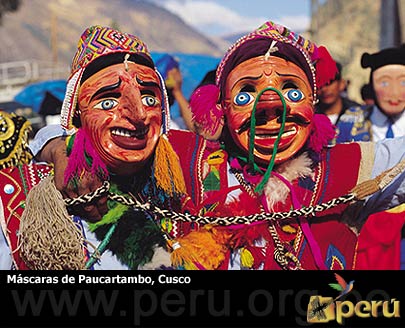
Peru Tourist Board imageDespite everything, readers still come to Arguedas looking for the voice of the subaltern. Arguedas is presented as a privileged translator between Quechua and Spanish, indigenous and Western, archaic and modern. "Speaking and writing from within," his is "an authentic, autonomous, testimonial, and metatestimonial voice" (Sandoval xxxvi).

Yes, critics are usually prepared to concede that nothing is ever quite so simple: the subaltern remains always somehow inaccessible; translation is acknowledged to be a risky, imperfect affair; and claims of authenticity and autonomy give way to the realities of transculturation, mestizaje, and the like.

But still, it is as though with Arguedas we can have our cake and eat it. Theory, precisely the theory that cautions us against such Romantic fantasies of authenticity, can be both affirmed and negated at the same time. We can deploy a theoretical discourse and yet bask in the aura of otherness.

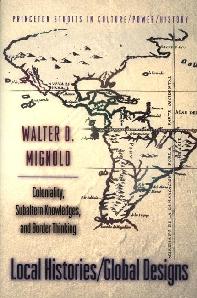
Mignolo Local Histories coverThere's more than a hint of this attitude in Walter Mignolo's influential work. His writing is densely packed with theoretical references and convoluted phraseology, including relative neologisms such as "coloniality of power," "border gnosis," "loci of enunciation," and "pluritopic hermeneutics."

Yet, beneath it all, what's at issue is a remarkably untheoretical inversion: those previously silenced should now be permitted to speak. Take for instance the following complex paragraph that presents the core argument of his book Local Histories / Global Designs:
That colonial modernities, or "subaltern modernities" as Coronil (1997) prefers to label it, a period expending from the late fifteenth century to the current stage of globalization, has built a frame and a conception of knowledge based on the distinction between epistemology and hermeneutics and, by so doing, has subalternized other kinds of knowledge is the main thesis of this book. That long process of subalternization of knowledge is being radically transformed by new forms of knowledge in which what has been subalternized and considered interesting only as object of study becomes articulated as new loci of enunciation. This is the second thesis of this book. The first is explored through a cultural critique of historical configurations; the second, by looking at the emergence of new loci of enunciation, by describing them as "border gnosis" and by arguing that "border gnosis" is the subaltern reason striving to bring to the foreground the force and creativity of knowledges subalternized during a long process of colonization of the planet, which was at the same time the process in which modernity and the modern Reason were constructed. (13)
Put to one side, if you will, the infelicity and even ungrammaticality of expression here--the lack of agreement, for instance, between subject and main verb in the opening sentence. Ignore also the repetition, apparent contradiction, and unnecessary complication.

Mignolo's basic points are in fact straightforward: that modernity promoted one form of knowledge over other forms; and that those other forms of knowledge are now re-emerging from their former suppression.

And though the articulation of such subaltern knowledges is clearly part of a political struggle, for Mignolo there is apparently little reason in theory why we should not have access to the voice of the other, given the right conditions.

The theoretical work required, it seems, amounts merely to a set of successive redescriptions, by which subaltern knowledge is renamed as "new loci of enunciation," only to be renamed once again as "border gnosis" and yet again as "subaltern reason." The theorist, then, becomes a translator and phrasemaker who re-presents subalternity within a suitably rarified frame of reference, so that it comes to seem equivalent, and so implicitly acceptable, to the allegedly mystifying discourse against which it is said to be arrayed.

So however laudable this project of discursive salvage seems at first sight, it's soon clear that such an unproblematic conception of desublaternization does little to overturn the applecart of Western reason: it merely assimilates "subaltern knowledge" to "colonial knowledge" (hence, in the paragraph above, "colonial modernities" and "subaltern modernities" are quickly conflated) and any concept of subalternity, or indeed of coloniality, disappears.

Ultimately this is a consoling exorcism of colonial guilt, whereby an author such as Arguedas can be taken up and celebrated for providing little more than costumbrismo: local colour and the image of difference rather than difference itself. And surely in a story such as "The Agony of Rasu-Ñiti", the most indigenist of all his work, is that not what he provides? No wonder the story is so celebrated. Despite or perhaps because of its anomalousness, it offers a glimpse of what Arguedas's readers want all along: the ventriloquy of "an authentic, autonomous, testimonial, and metatestimonial voice."

The question then is how to read Arguedas otherwise. How perhaps to misread him, to stumble in our reading, to stutter as his awkward, barely literary prose often stutters and threatens to break down, so that subalternity is truly brought to light, or made present, without being wished away by our desires, precisely, for presence. How, in short, to ensure that it is difference that is presented, for the first time; rather than a fantasized sameness that is re-presented, familiarly meeting our expectations.

(And how to do this without being subject to the same critique: of deploying a theoretical discourse and yet basking in the aura of otherness?)