As an addendum to my previous post:
So what about ethics? Ethics as post-political politics?
I'm not sure about the advantages of this move. I used to be. No longer.
Wednesday, September 14, 2005

representation
Commenting on my earlier post about global citizenship, Jodi argues that "politics is impossible without representation, that is, without drawing lines, making distinctions, exclusions, and representing these in terms of a universal."
And Craig half agrees when he says that he "can't imagine a politics without representations or symbols." He half disagrees, however, in that he argues that "it isn't clear that this has to be 'universal' such that the representation entirely overwhelms the original political moment of getting together and coming up with a project in common."
What's at issue here is perhaps partly the distinction between representation as proxy (Vertretung) and as portrait (Darstellung).
But to put it this way: why does what Craig terms a "point of a agreement" have to be symbolically portrayed? Why should agreement not be incarnated in the bodies that meet in an encounter or community? Isn't that what a politics of affective resonance suggests?
To conceive of politics only in terms of representation is surely a drastic limitation of its proper sphere. And yes, it may be the imposition of such limits that is, in Jodi's sense, the political. But the price paid is that politics is always secondary, always a delicate flower that can be interrupted at any moment.
I can see a certain sense to this position, but it casts the interruption itself into the outer darkness of anti-politics.
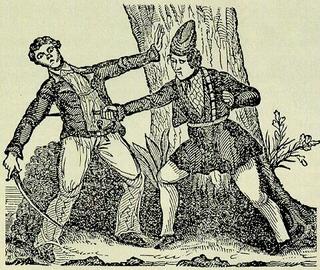
To put it another way: tonight I am giving a talk (on piracy) to a seminar on "political violence." I have been frustrated with this seminar in that so far we may sometimes have managed to discuss politics, and less often to discuss violence, but we have never managed to think through the conjuncture that would be "political violence."
Surely that's because, for a concept of politics founded in representation, violence has to be the anti-political rupture par excellence. But what a setback, no longer to be able to talk about violence politically, except as the other or limit to politics!
Yes, piracy pervades Western cultural and political imagination, and so (symbolic) representation. And, yes, that imagination casts pirates themselves into the outer darkness of anti-politics, villains of all nations, outcasts at sea. Their exclusion is one of the founding acts of the West's political representation: pirates have no proxies. But can we not conceive of pirates, too, as political subjects?
Or can pirates only become political by accepting our norms of liberal civility, representation, and mediation? By, already, agreeing with us?
And Craig half agrees when he says that he "can't imagine a politics without representations or symbols." He half disagrees, however, in that he argues that "it isn't clear that this has to be 'universal' such that the representation entirely overwhelms the original political moment of getting together and coming up with a project in common."
What's at issue here is perhaps partly the distinction between representation as proxy (Vertretung) and as portrait (Darstellung).
But to put it this way: why does what Craig terms a "point of a agreement" have to be symbolically portrayed? Why should agreement not be incarnated in the bodies that meet in an encounter or community? Isn't that what a politics of affective resonance suggests?
To conceive of politics only in terms of representation is surely a drastic limitation of its proper sphere. And yes, it may be the imposition of such limits that is, in Jodi's sense, the political. But the price paid is that politics is always secondary, always a delicate flower that can be interrupted at any moment.
I can see a certain sense to this position, but it casts the interruption itself into the outer darkness of anti-politics.

To put it another way: tonight I am giving a talk (on piracy) to a seminar on "political violence." I have been frustrated with this seminar in that so far we may sometimes have managed to discuss politics, and less often to discuss violence, but we have never managed to think through the conjuncture that would be "political violence."
Surely that's because, for a concept of politics founded in representation, violence has to be the anti-political rupture par excellence. But what a setback, no longer to be able to talk about violence politically, except as the other or limit to politics!
Yes, piracy pervades Western cultural and political imagination, and so (symbolic) representation. And, yes, that imagination casts pirates themselves into the outer darkness of anti-politics, villains of all nations, outcasts at sea. Their exclusion is one of the founding acts of the West's political representation: pirates have no proxies. But can we not conceive of pirates, too, as political subjects?
Or can pirates only become political by accepting our norms of liberal civility, representation, and mediation? By, already, agreeing with us?
Tuesday, September 13, 2005
transition
The superhero as double is common in Hollywood cinema. When he is not out saving the world, Superman takes refuge in his alter ego, the mild-mannered reporter Clark Kent. Batman is (and is not) the playboy Bruce Wayne. Spiderman and nerdy Daily Bugle photographer Peter Parker are one and (almost) the same.
 But before all these (indeed, anticipating them by twenty years) there was Zorro aka Don Diego de la Vega. As the Zorro Legend website points out, Johnston McCulley's character, part foppish aristocrat, part avenging swordsman, echoes the Baroness Orczy's Scarlet Pimpernel. In The Mark of Zorro, Douglas Fairbanks takes this literary doppelganger and makes of him what could well be Hollywood's first superhero.
(William Stoddard also has a good review and discussion of McCulley's book and the 1920 adaptation.)
 Zorro's remit, however, is more local and more clearly political than that of most later superheroes. He's not called in to save the world, but he does aim to change it. Lately returned from Spain to his native California, Don Diego is disgusted with the corruption of Spanish imperial power, a corruption manifest in mistreatment of Indians, of priests, and (what is worst of all) of the beautiful Señorita Lolita Pulido.
Zorro's task is to rouse what has become a servile and languid creole aristocracy, and to goad them into ejecting the Spanish interloper from their shores.
Clearly, persuasion alone is not going to galvanize the Californian caballeros. Zorro aims to shame his fellows into action. The split between Don Diego, the fop rejected by the beauty Lolita, and Zorro, the dark knight who charms and impresses her with his hyper-masculine sword-thrusts, enacts the sexualized psychodrama of a quiescent upper class being beaten to the prize by new, mobile men of action. The lesson to be learned is immediately affective: the creole class lacks intensity; but shame could lead to revivified pride, and so to political significance at last.
The two aspects to Fairbanks's character are therefore less different psychologically than they incarnate differing states of the body: tiredness vs. wakefulness; langour vs. vigilance; passivity vs. activity; quiescence vs. tumescence. And the film as a whole is a film of the transition, of the individual but also the collective shift from sedentariness to motility.
Fairbanks's stunts (most of which he performed himself) are always exaggeratedly physical: his body describes ever more impressive arcs and leaps, jumping on to and over horses, over wagons and up walls. His characteristic movement is something like a sideways combined twist and turn and spring from a standing start.
At the same time, Zorro knows when to keep still. A favoured trick is to hide behind a bush, a door, or a wall, while a horde of pursuers blunder blindly past. It is not therefore movement per se that is valorized: it is the right combination of movement and rest. Zorro's stillness is taught with the alert possibility of sudden movement at any moment. His body is a spring coiled and ready to leap. It is the instant of contraction before an explosive power is unleashed.
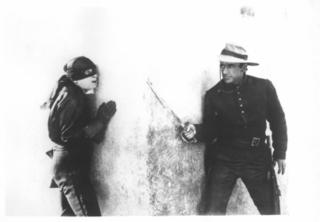
Just a couple of decades after the US had dispossessed Spain of its last imperial possessions (Cuba, Puerto Rico, and the Philippines), and a couple of years after Europe had been suicidally bogged down in the First World War trenches, surely Zorro could also be seen as the image of US power ready to unfold. And his warning to Don Diego seen as a caution against the country's resting on its new-found laurels. Fairbanks's Zorro marks America's transition as it becomes superpower.
(Crossposted from Latin America on Screen.)
 But before all these (indeed, anticipating them by twenty years) there was Zorro aka Don Diego de la Vega. As the Zorro Legend website points out, Johnston McCulley's character, part foppish aristocrat, part avenging swordsman, echoes the Baroness Orczy's Scarlet Pimpernel. In The Mark of Zorro, Douglas Fairbanks takes this literary doppelganger and makes of him what could well be Hollywood's first superhero.
(William Stoddard also has a good review and discussion of McCulley's book and the 1920 adaptation.)
 Zorro's remit, however, is more local and more clearly political than that of most later superheroes. He's not called in to save the world, but he does aim to change it. Lately returned from Spain to his native California, Don Diego is disgusted with the corruption of Spanish imperial power, a corruption manifest in mistreatment of Indians, of priests, and (what is worst of all) of the beautiful Señorita Lolita Pulido.
Zorro's task is to rouse what has become a servile and languid creole aristocracy, and to goad them into ejecting the Spanish interloper from their shores.
Clearly, persuasion alone is not going to galvanize the Californian caballeros. Zorro aims to shame his fellows into action. The split between Don Diego, the fop rejected by the beauty Lolita, and Zorro, the dark knight who charms and impresses her with his hyper-masculine sword-thrusts, enacts the sexualized psychodrama of a quiescent upper class being beaten to the prize by new, mobile men of action. The lesson to be learned is immediately affective: the creole class lacks intensity; but shame could lead to revivified pride, and so to political significance at last.
The two aspects to Fairbanks's character are therefore less different psychologically than they incarnate differing states of the body: tiredness vs. wakefulness; langour vs. vigilance; passivity vs. activity; quiescence vs. tumescence. And the film as a whole is a film of the transition, of the individual but also the collective shift from sedentariness to motility.
Fairbanks's stunts (most of which he performed himself) are always exaggeratedly physical: his body describes ever more impressive arcs and leaps, jumping on to and over horses, over wagons and up walls. His characteristic movement is something like a sideways combined twist and turn and spring from a standing start.
At the same time, Zorro knows when to keep still. A favoured trick is to hide behind a bush, a door, or a wall, while a horde of pursuers blunder blindly past. It is not therefore movement per se that is valorized: it is the right combination of movement and rest. Zorro's stillness is taught with the alert possibility of sudden movement at any moment. His body is a spring coiled and ready to leap. It is the instant of contraction before an explosive power is unleashed.

Just a couple of decades after the US had dispossessed Spain of its last imperial possessions (Cuba, Puerto Rico, and the Philippines), and a couple of years after Europe had been suicidally bogged down in the First World War trenches, surely Zorro could also be seen as the image of US power ready to unfold. And his warning to Don Diego seen as a caution against the country's resting on its new-found laurels. Fairbanks's Zorro marks America's transition as it becomes superpower.
(Crossposted from Latin America on Screen.)
Monday, September 12, 2005
hubris
In his Seven Theses on the Dinosaur, W. J. T. Mitchell argues that the dinosaur "symbolizes the power of the total state in its modern constitutional form." And Gabriela Nouzeilles has shown how the Argentine state invoked Patagonian dinosaur remains to naturalize its claims of national autonomy and power.
But the creatures in Harry Hoyt's classic silent The Lost World are a little more ambivalent.
Located in the heart of deepest, darkest Latin America, far up the Amazon somewhere at the confluence of Brazil, Colombia, and Peru, they certainly instantiate peripheral under-development.
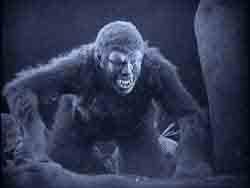 Moreover, these lumbering beasts occupy what is merely one end of a continuum: they share their plateau homeland with both apes and rather menacing apemen. Down below, in the tropical jungle, are snakes, alligators, sloths, and human "half-breeds," the zambo half black, half Indian. Also left behind in camp, while the main exploring party go on above to search for signs of the previous expedition in the area, is Austin, an English domestic servant. The main party itself is divided between the old and more or less unfit (Professor Summerlee) and the young and nubile, not least the journalist Malone who proves his worth as a husband by braving the South American wilderness, so winning Paula White as female prize from the veteran explorer Sir John Roxton.
But this hierarchy is not entirely stable: Jocko, the pet monkey, is (as Summerlee is reminded) more useful than some of the human members of the group; and Professor Challenger himself often (as Deleuze and Guattari point out) appears half-simian, hirsute and hot-headed, becoming-animal in his enthusiasm and stubbornness, and, not least, his vitriol against the written word.
Moreover, if the Conan Doyle novel on which the movie is based frames Challenger's expedition as a civilising mission, concluding with the apemen wiped out or enslaved and a client regime of grateful natives installed on the plateau, the film version differs sharply. Here, the "lost world" is devastated by a sudden volcanic eruption. One brontosaurus, however, escapes and is taken back to London--only there to escape again, cause mayhem in the streets, and collapse the iconic Tower Bridge, before, in the film's final frames, heading back towards Latin America by sea.
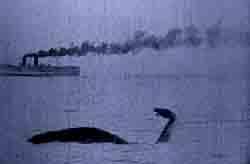
At the head of the tradition of monster movies that it initiates (animator Willis O'Brien would go on to work on King Kong, in many ways a remake of this film), The Lost World introduces a preoccupation with the monster as a genie disturbed, its vengeance a return for modern hubris. In this, of course, Spielberg's own Lost World is a true inheritor.
But if Spielberg's emphasis is on the dangers of science over-reaching itself, is not Harry Hoyt's theme imperial decline, his fear (and the fear radiated in the innumerable close-up reaction shots of Bessie Love playing Paula White) that of the untamed forces of what was once thought natural terrain for colonial intervention?
(Crossposted from Latin America on Screen.)
But the creatures in Harry Hoyt's classic silent The Lost World are a little more ambivalent.
Located in the heart of deepest, darkest Latin America, far up the Amazon somewhere at the confluence of Brazil, Colombia, and Peru, they certainly instantiate peripheral under-development.
 Moreover, these lumbering beasts occupy what is merely one end of a continuum: they share their plateau homeland with both apes and rather menacing apemen. Down below, in the tropical jungle, are snakes, alligators, sloths, and human "half-breeds," the zambo half black, half Indian. Also left behind in camp, while the main exploring party go on above to search for signs of the previous expedition in the area, is Austin, an English domestic servant. The main party itself is divided between the old and more or less unfit (Professor Summerlee) and the young and nubile, not least the journalist Malone who proves his worth as a husband by braving the South American wilderness, so winning Paula White as female prize from the veteran explorer Sir John Roxton.
But this hierarchy is not entirely stable: Jocko, the pet monkey, is (as Summerlee is reminded) more useful than some of the human members of the group; and Professor Challenger himself often (as Deleuze and Guattari point out) appears half-simian, hirsute and hot-headed, becoming-animal in his enthusiasm and stubbornness, and, not least, his vitriol against the written word.
Moreover, if the Conan Doyle novel on which the movie is based frames Challenger's expedition as a civilising mission, concluding with the apemen wiped out or enslaved and a client regime of grateful natives installed on the plateau, the film version differs sharply. Here, the "lost world" is devastated by a sudden volcanic eruption. One brontosaurus, however, escapes and is taken back to London--only there to escape again, cause mayhem in the streets, and collapse the iconic Tower Bridge, before, in the film's final frames, heading back towards Latin America by sea.
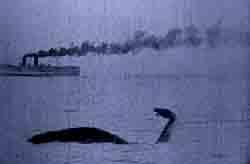
At the head of the tradition of monster movies that it initiates (animator Willis O'Brien would go on to work on King Kong, in many ways a remake of this film), The Lost World introduces a preoccupation with the monster as a genie disturbed, its vengeance a return for modern hubris. In this, of course, Spielberg's own Lost World is a true inheritor.
But if Spielberg's emphasis is on the dangers of science over-reaching itself, is not Harry Hoyt's theme imperial decline, his fear (and the fear radiated in the innumerable close-up reaction shots of Bessie Love playing Paula White) that of the untamed forces of what was once thought natural terrain for colonial intervention?
(Crossposted from Latin America on Screen.)
Sunday, September 11, 2005
smoke
 The original programme notes to The Gaucho, while emphasizing the painstaking research that lies behind the film's script and scenography, state that:
Douglas [Fairbanks] has always held that "things as they are" are never as appealing as "things as we would like to see them."But what then does this film indicate about what its audience would like to see?
The answer would appear to be: miracles, shrines, macho Argentine country-folk, Lupe Velez's heaving bosom, and the power of religion to redeem even the most inveterate of criminals.
Meanwhile, we would like to see gauchos, if Douglas Fairbanks's portrayal is anything to go by, as raucous, rambunctious folk, who like to drink, dance, and fight, are athletic and a hit with the ladies, and who smoke like a chimney. Fairbanks's cigarette is his constant prop. At one point he swallows it up within his mouth while he pauses to kiss Velez, the mountain girl, only for it to pop out again shortly afterwards.
As always, however, the gauchos are a dying breed. (And it ain't just the lung cancer that'll get 'em.)
Though this film portrays them at their peak, overwhelming Andean villages and evil dictatorial usurpers alike, it also shows the gaucho tamed. Struck by a dreaded lurgy (the "black doom"), a mysterious illness that makes his hand black and numb, Fairbanks's un-named gaucho is about to commit suicide until the saintly girl of the shrine leads him to where Mary Pickford (playing the Virgin Mary) can cure him and turn his life around. Converted to Christianity, he determines to make an honest woman of his lover, Velez, and so presumably an honest, no longer gaucho, man of himself.
The Gaucho was touted for its lavish and expansive sets. The Andes here are near vertical cliffs, within which the people live in no more than caves. The plains, on the other hand, are bedecked with palm trees and throng with cattle for as far as the eye can see.
But who tends these cattle? Hardly anyone here works. Aside from the bartender in the village cantina and the padre at the shrine, the people are divided into three roughly equal parts: beggars, soldiers, and bandits.
This is a story set in some mythical, premodern past. The Latin America presented here is almost entirely a generic image of rural poverty, militaristic tyranny, and popular religiosity, The gaucho bolas, horsemanship, and spurs are the particularistic details around which the shallow characterization is spun. But everything blurs in a haze of cigarette smoke and the dust raised by stampeding cattle.
(Crossposted from Latin America on Screen.)
Saturday, September 10, 2005
citizenship (global)
 The spread of a discourse of "global citizenship" comes from the fact that citizenship itself (of the old-fashioned, national variety) is in crisis.
With the failure of representative institutions, endemic voter apathy and disenfranchisement, the democratic deficit of national regimes both Western and non-Western, let alone multinational organizations from the UN to Monsanto, liberal theorists appeal to so-called global civil society and a diverse range of social movements, shoe-horning their practices into a citizenship model, to be secured by an ever more expansive state.
The whole enterprise is ethically, pragmatically, and politically bankrupt.
The days of the citizen-subject are numbered, if not already over. Fetishizing that outmoded form obscures any analysis of the new forms of subjectivity that are enforced or enabled in the current balance of forces between Empire and Exodus.
Liberal political theory remains blind to the "bare life" of the non-subject in Guatánamo or the New Orleans Superdome, and is incapable of assessing the fluid subjectivities of terrorist or looter, multitude good or bad.
Friday, September 09, 2005
intractability
Rio has to be one of Hollywood's favourite destinations. Indeed, I wouldn't be surprised if it were its most favoured Latin American destination, and perhaps even its number one location for Third World exotica as a whole.
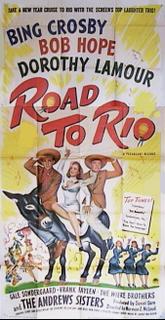 By 1947, Fred Astaire, Ginger Rogers, Dolores del Rio, and Gene Raymond had already flown down to Rio, Basil Rathbone had escaped and gone on the rampage in Rio, even Charlie Chan had made it to Rio, while Jane Powell and Ann Southern would soon be on their way, Carmen Miranda in tow, though she'd already been there for at least a night with Don Ameche. Meanwhile, coming the other way, we'd had both a girl and a kid emerge from the Brazilian metropolis.
So by the time that Bing Crosby and Bob Hope get on the road to Rio, it's more a well-travelled expressway than a winding path.
Thanks to this slew of 1930s and 1940s movies, Rio de Janeiro was by now almost familiar to US cinema-goers. And it became familiar, as Latin America so often has, via its music, or a version of its music. Most of the films I've just mentioned are musicals, or contain musical interludes, often set in the city's opulent nightclubs, as Hollywood imagined them. Road to Rio is no exception, and can even afford to be self-reflexive about its trading in Latin musical exotica, as in the climactic wedding scene where Bob Hope hams up a parody version of Carmen Miranda.
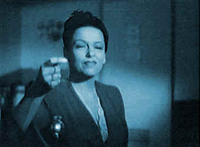 But for all its familiarity, Rio maintains its distance. There's a dark side to Latin America in these films, though this touch of danger (touch of evil as Welles will soon suggest) is also part of its allure. Here that dangerous enticement is figured as hypnosis: the evil aunt, from whom Bing and Bob have to wrest the beautiful niece, keeps her charge in check by dangling her ever-present pendant in front of the girl's eyes and telling her that she's feeling sleepy... She pulls the same trick on our hapless heroes, almost (but not quite) inveigling them into shooting each other in a duel in the middle of what is, not insignificantly, the only bit of untamed nature we get to see.
It's interesting, however, that Crosby and Hope's characters pick up on hypnosis as a technique to outwit the aunt's henchmen. Moreover, the movie ends with a scene in which Bob has himself subjected the girl to a marriage against her will by means of the same pendant once owned by the aunt. This mirroring or imitation is found throughout the film (and not just this one, it's worth adding). Indeed, Bing and Bob have already used a technique very similar to hypnosis in order to trick breakfast from a seasick liner passenger.
The imitation goes every which way: Hope parodies Miranda's (almost) self-parodic Americanized Brazilianism, while a trio of Brazilian musicians are passed off as part of a Dixie band by being taught the limited "hep cat" vocabulary of "You're telling me," "You're in the groove, Jackson," and "This is Murder."
And the film's best and catchiest number, the one instance of Crosby performing with the Andrews sisters on screen, is "You Don't Even Have to Know the Language", a celebration of affective tourism, the possibilities of immediate contact beneath discourse:
Despite all this, there remain inextricable obstacles to getting under the Latin skin. Some hard kernel of unknowable difference. Here, this is figured through the mysterious "papers" that drive the film's plot. We never figure out what they are. The film disappoints our expectations, self-reflectively denying us our full enjoyment of latinidad. The cavalry don't turn up in the end. And the papers? We don't get to read them, because fundamentally they must be illegible, an instance or trace some unbridgeable Latin American difference.
And so there's a strange, subterranean resonance here, between this lightest of comedic representations of Latin America, and that most traumatic and anguished view, Herzog's Aguirre, in which Ruy Guerra's Don Pedro de Ursúa dies still clutching some intractable, illegible fragment of the Latin American real...
(Crossposted from Latin America on Screen.)
 By 1947, Fred Astaire, Ginger Rogers, Dolores del Rio, and Gene Raymond had already flown down to Rio, Basil Rathbone had escaped and gone on the rampage in Rio, even Charlie Chan had made it to Rio, while Jane Powell and Ann Southern would soon be on their way, Carmen Miranda in tow, though she'd already been there for at least a night with Don Ameche. Meanwhile, coming the other way, we'd had both a girl and a kid emerge from the Brazilian metropolis.
So by the time that Bing Crosby and Bob Hope get on the road to Rio, it's more a well-travelled expressway than a winding path.
Thanks to this slew of 1930s and 1940s movies, Rio de Janeiro was by now almost familiar to US cinema-goers. And it became familiar, as Latin America so often has, via its music, or a version of its music. Most of the films I've just mentioned are musicals, or contain musical interludes, often set in the city's opulent nightclubs, as Hollywood imagined them. Road to Rio is no exception, and can even afford to be self-reflexive about its trading in Latin musical exotica, as in the climactic wedding scene where Bob Hope hams up a parody version of Carmen Miranda.
 But for all its familiarity, Rio maintains its distance. There's a dark side to Latin America in these films, though this touch of danger (touch of evil as Welles will soon suggest) is also part of its allure. Here that dangerous enticement is figured as hypnosis: the evil aunt, from whom Bing and Bob have to wrest the beautiful niece, keeps her charge in check by dangling her ever-present pendant in front of the girl's eyes and telling her that she's feeling sleepy... She pulls the same trick on our hapless heroes, almost (but not quite) inveigling them into shooting each other in a duel in the middle of what is, not insignificantly, the only bit of untamed nature we get to see.
It's interesting, however, that Crosby and Hope's characters pick up on hypnosis as a technique to outwit the aunt's henchmen. Moreover, the movie ends with a scene in which Bob has himself subjected the girl to a marriage against her will by means of the same pendant once owned by the aunt. This mirroring or imitation is found throughout the film (and not just this one, it's worth adding). Indeed, Bing and Bob have already used a technique very similar to hypnosis in order to trick breakfast from a seasick liner passenger.
The imitation goes every which way: Hope parodies Miranda's (almost) self-parodic Americanized Brazilianism, while a trio of Brazilian musicians are passed off as part of a Dixie band by being taught the limited "hep cat" vocabulary of "You're telling me," "You're in the groove, Jackson," and "This is Murder."
And the film's best and catchiest number, the one instance of Crosby performing with the Andrews sisters on screen, is "You Don't Even Have to Know the Language", a celebration of affective tourism, the possibilities of immediate contact beneath discourse:
You stop at the Copacabana(Meanwhile, how about this for a song of good neighborliness?)
With the Sugar Loaf mountain in view
So the words on the menu mean nothing
You can't ask a soul what to do
But, you don't have to know the language
With the moon in the sky
And the girl in your arms
And a look in her eyes.
Despite all this, there remain inextricable obstacles to getting under the Latin skin. Some hard kernel of unknowable difference. Here, this is figured through the mysterious "papers" that drive the film's plot. We never figure out what they are. The film disappoints our expectations, self-reflectively denying us our full enjoyment of latinidad. The cavalry don't turn up in the end. And the papers? We don't get to read them, because fundamentally they must be illegible, an instance or trace some unbridgeable Latin American difference.
And so there's a strange, subterranean resonance here, between this lightest of comedic representations of Latin America, and that most traumatic and anguished view, Herzog's Aguirre, in which Ruy Guerra's Don Pedro de Ursúa dies still clutching some intractable, illegible fragment of the Latin American real...
(Crossposted from Latin America on Screen.)
Thursday, September 08, 2005
insurgency
Can we then talk of insurgency?
Lenin (of the Tomb), in his post "Why was New Orleans turned into a war zone?", asks "what the fuck is all this 'insurgency' gibberish?" A spirited debate has ensued in the comments, about the nature of the contemporary state and its relation to violence. "I repeat and underscore 'there was no insurgency'", repeats and underscores lenin.
Elsewhere on the Tomb, in another post that caused a flurry of disagreement in the comments, BionOc's "Recipe for Lawlessness, Cajun-Style" gives us, not a denial of violence, but its rationalization: "Now, I'm not for a minute going to excuse those crimes. They are inexcusable. But I'm damned if I'm going to shy away from trying to understand them."
Within his tomb, Lenin must be slowly rotating.
It's the classical liberal response either to deny subaltern violence or to rationalize it away through "understanding." Indeed, BionOc pithily gives us the liberal view on criminality in nugatory form. Hate the sin, love the sinner.
It's also true, however, that all talk of violence is its rationalization, to some extent or another. All discourse defers the materiality of blood, sweat, and affect. It is all, in this sense, what Ranajit Guha terms "prose of counter-insurgency."
So can we talk of insurgency? No. But perhaps we can show how insurgency distorts and mangles language, surprises it and forces it into increasingly desperate ("I repeat and underscore") rearguard actions of denial, deferral, or denunciation. All insurgency talk is reduced to "gibberish."
On the one hand, everything is out in the open in these posthegemonic times. Little if anything is hidden. But that's not to say that language serves no function. Rather, on the other hand, it is that it is discourse's most basic function that is now evident: to mobilize affect, but also to damn it up, territorialize it in the classic double articulation familiar from all populisms. The point isn't the sense it does or doesn't make: of course it's "gibberish." Discourse now works directly with and on the body, deferring violence in the case of what once passed for socialism, or inciting it in the case of an increasingly naked neo-conservativism.
Simply two modes of counter-insurgency, prosaic mirrors of each other.
Tuesday, September 06, 2005
looting
Peter Linebaugh is always good value. And here he is with a brief article entitled "Once Looting was the Pay of Imperial Soldiers" (via wood s lot). A snippet:
[Update: thanks to s0metim3s, a link to "Get Off the Fucking Freeway", from MetaMute.]
In Zora Neale Hurston's great flood novel, Their Eyes Were Watching God, the people become a chorus to the events of the mighty. "It was the time for sitting on porches beside the road. The sun and the bossman were gone, so the skins felt powerful and human. They passed nations through their mouths. They sat in judgment." This helps explain why Bush could not visit the Convention Center or the Superdome. Tens of thousands sit in judgment.Now go and read The London Hanged, which has much to say about pilfering, custom, and criminality. Then read The Many-Headed Hydra, which is among other things a book about pirates. I hear the Beacon Press paperback has some fantastic blurb.
The history of New Orleans is a history of class war; and class war brings out the actualities in the potential of communism: the thirsty do not ask permission to take a drink, nor the hungry food. Is it the new society? Of course not. But it could be; this is self-activity. The ruling class does all it can to prevent it from happening.
[Update: thanks to s0metim3s, a link to "Get Off the Fucking Freeway", from MetaMute.]
spurious
This is mainly just to say that there is a great post from Spurious of a couple of days ago on philosophy, academia, and time.
I may comment further later, but for the moment just wanted to draw some attention to Spurious's post.
I may comment further later, but for the moment just wanted to draw some attention to Spurious's post.
Monday, September 05, 2005
liquidity
Events in New Orleans illustrate the geography of power.
The opposition between high and low gives rise to some of the most deeply embedded social metaphors. The rich and powerful are always "above," "on top," and "superior." The poor and powerless are the "lowly," "cast down," and "downtrodden."
This sense of power's transcendence is incarnated in the built environment, at a level far beneath ideology.
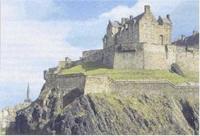 The powerful build on the high ground. Perhaps originally the reasons for this were strategic, as a means to command the surrounding territory. But this social topography survives even in suburbia. Where I grew up, the most expensive and largest houses were found on the street named "Hilltop," which was the summit of the most gradual and gentle of slopes. The further down this almost imperceptible hill you went, the further "downmarket" the real estate.
There's no great surprise, then, that one of the poorest cities in the USA should also be the most low-lying. And that within the city, it should be the poor at the city's geographical "bottom" who are more affected than the rich in the elevated suburbs.
The New York Times has maps of New Orleans that correlate race, household income, population density, and topography. (Click on "type of map" to switch between them.) As Richard Gwyn notes in the Toronto Star, "A map showing where black people live in the city agrees almost perfectly with a map showing where poor people live — and also agrees quite well with a map showing the lowest-lying neighbourhoods most affected by the flooding."
The powerful also build up. Tall buildings have defined and marked claims to spectacular transcendence from the Ptolemies to the medieval church, from the Rockefellers to Malaysian and Taiwanese assertions of their place in the First World elite. But 9/11 showed the vulnerabilities intrinsic to such excessive height. The elite have always been concerned about the possibilities that the underclass might "rise up" and "tear down" the walls that they have constructed.
Part of that fear comes from the awareness that theirs, the power of solidity and height, is a secondary power: that there is another power, fluid and deep, that is in fact primary.
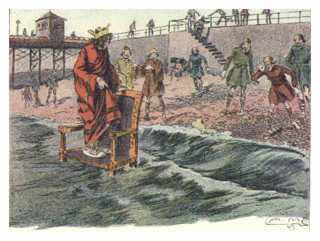 There has always been a particular rivalry between solidity and liquidity. Liquids level, either slowly, through erosion, or tumultuously and violently, as the dams break and the tidal wave comes through. They dissolve, make immanent, everything that the elite hold dear. The fable of Canute tells us that sovereignty can control everything but rising water. And the downfall of a capitalist enterprise is its liquidation.
No wonder that revolutions are often figured as floods. "Après nous, le déluge," as Madame Pompadour said.
And no wonder then that the flooding of New Orleans should have incited such panic about the threat of an unleashed African American underclass.
[Update: Lenin's Tomb links to an article from the Chicago Tribune that has the following revealing tidbit: "'It's the blacks,' whispered one white woman in the elevator. 'We always worried this would happen.'" The anxiety at the heart of power...]
The opposition between high and low gives rise to some of the most deeply embedded social metaphors. The rich and powerful are always "above," "on top," and "superior." The poor and powerless are the "lowly," "cast down," and "downtrodden."
This sense of power's transcendence is incarnated in the built environment, at a level far beneath ideology.
 The powerful build on the high ground. Perhaps originally the reasons for this were strategic, as a means to command the surrounding territory. But this social topography survives even in suburbia. Where I grew up, the most expensive and largest houses were found on the street named "Hilltop," which was the summit of the most gradual and gentle of slopes. The further down this almost imperceptible hill you went, the further "downmarket" the real estate.
There's no great surprise, then, that one of the poorest cities in the USA should also be the most low-lying. And that within the city, it should be the poor at the city's geographical "bottom" who are more affected than the rich in the elevated suburbs.
The New York Times has maps of New Orleans that correlate race, household income, population density, and topography. (Click on "type of map" to switch between them.) As Richard Gwyn notes in the Toronto Star, "A map showing where black people live in the city agrees almost perfectly with a map showing where poor people live — and also agrees quite well with a map showing the lowest-lying neighbourhoods most affected by the flooding."
The powerful also build up. Tall buildings have defined and marked claims to spectacular transcendence from the Ptolemies to the medieval church, from the Rockefellers to Malaysian and Taiwanese assertions of their place in the First World elite. But 9/11 showed the vulnerabilities intrinsic to such excessive height. The elite have always been concerned about the possibilities that the underclass might "rise up" and "tear down" the walls that they have constructed.
Part of that fear comes from the awareness that theirs, the power of solidity and height, is a secondary power: that there is another power, fluid and deep, that is in fact primary.
 There has always been a particular rivalry between solidity and liquidity. Liquids level, either slowly, through erosion, or tumultuously and violently, as the dams break and the tidal wave comes through. They dissolve, make immanent, everything that the elite hold dear. The fable of Canute tells us that sovereignty can control everything but rising water. And the downfall of a capitalist enterprise is its liquidation.
No wonder that revolutions are often figured as floods. "Après nous, le déluge," as Madame Pompadour said.
And no wonder then that the flooding of New Orleans should have incited such panic about the threat of an unleashed African American underclass.
[Update: Lenin's Tomb links to an article from the Chicago Tribune that has the following revealing tidbit: "'It's the blacks,' whispered one white woman in the elevator. 'We always worried this would happen.'" The anxiety at the heart of power...]
Sunday, September 04, 2005
aid
I thought he would (the wily old fox seldom misses a trick), and indeed Castro has offered to send medical aid to the US in the wake of Hurricane Katrina.
I wonder whether Bush took Fidel up on his kind offer.
I wonder whether Bush took Fidel up on his kind offer.
Saturday, September 03, 2005
gardening
This from Simon Williams's Emotion and Social Theory:
I take the correct word to be an antonym of ambivalence, just as legislative ambitions are opposed to underdetermination and order undermined by contingency. But I can't for the life of me think of a word that sounds or looks like "gardening" that would make more sense in this context.
Answers on a postcard, please.
Otherwise, perhaps Williams is indeed referring to the horticultural side of power...
Within the modern rationalist project--elements of which include the legislative ambitions of philosophical reason, the gardening ambitions of the state, and the ordering ambitions of the applied sciences--underdetermination, ambivalence and contingency are construed as a threat... (17; my emphasis)Now, there is surely an argument to be made about the relationship between sovereignty and landscape gardening, between politics and pruning, and so on. But I hardly believe that this is what Williams means. Surely this is a typo. What, then, did he mean to write?
I take the correct word to be an antonym of ambivalence, just as legislative ambitions are opposed to underdetermination and order undermined by contingency. But I can't for the life of me think of a word that sounds or looks like "gardening" that would make more sense in this context.
Answers on a postcard, please.
Otherwise, perhaps Williams is indeed referring to the horticultural side of power...
Negri
Via The Weblog, Anthony Paul Smith points us to a Negri documentary now online.
The film has a lot to say about the Italian context to Negri's work, and so Potere Operaio and the Hot Autumn etc. As often, however, Negri is otherwise portrayed as pretty much existing in an intellectual vacuum until he came to France and met Deleuze and Guattari, when finally (it is implied) he could think.
The most interesting thing about the film, given that it offers little more than a gestural outline of Negri's theories (the refusal of work, self-valorization, social workers, and multitude are all name-checked) is the archive footage it offers of Italy in the 1970s.
Meanwhile the multitude, it would appear from the clips we are shown here, is but a matter of getting down with the bees.
Thursday, September 01, 2005
Parr
I've been a fan of photographer Martin Parr's work ever since I first saw his book Signs of the Times. I think it was because his photographs, and the laconic quotations that accompanied them, seemed to illustrate Pierre Bourdieu's Distinction better than anything else I'd seen.

"We wanted a cottagey stately home kind of feel."
I don't like all his work--I'm less keen, for instance, on his super-saturated images in Common Sense or Think of England--but he has an extraordinary eye, a wry perspective that's never as simple as it seems, and an inventiveness and creativity that gives his work great diversity, while all the time he maintains his customary obsessions.
Who would have thought, for instance, that he'd come up with a project such as Saddam Hussein Watches? And yet, once you have seen it, it's so obvious, so... Martin Parr. It is, moreover, a typically oblique take on politics. Parr is among the most political of photographers, but at the same time one of the most disturbingly apolitical.
Perhaps what's disturbing about Parr's work is how often it literalizes the notion that, ultimately, photography is no more than collectionism.
Parr himself is a notorious collector. I remember seeing a documentary about him in which he showed an interviewer around his house, absolutely stuffed with an almost unimaginably vast assortment of old comics, cheesy plastic ornaments, postcards, and so on. Several of these collections have been repackaged as books, most notably the "Boring Postcards" series. Parr also collects concepts and ideas, with the same almost anti-intellectual, anti-theoretical, non-judgmental passion that characterizes all true collectors: one of his projects, for example, has been to photograph the last parking spaces in car parks around the world.
 So (and despite what I said above) Parr endlessly implies that his photography follows no other logic than his own compulsion to take a picture of yet another person on a mobile phone, say. That the photographer is only some kind of semi-autistic über-geek trainspotter, whose snapshots can have no claims to artistry, subjectivity, or intention, beyond the purely mechanical, machinic.
At times, in short, it is as though the photographer were no more than the camera's prosthesis.

I don't like all his work--I'm less keen, for instance, on his super-saturated images in Common Sense or Think of England--but he has an extraordinary eye, a wry perspective that's never as simple as it seems, and an inventiveness and creativity that gives his work great diversity, while all the time he maintains his customary obsessions.
Who would have thought, for instance, that he'd come up with a project such as Saddam Hussein Watches? And yet, once you have seen it, it's so obvious, so... Martin Parr. It is, moreover, a typically oblique take on politics. Parr is among the most political of photographers, but at the same time one of the most disturbingly apolitical.
Perhaps what's disturbing about Parr's work is how often it literalizes the notion that, ultimately, photography is no more than collectionism.
Parr himself is a notorious collector. I remember seeing a documentary about him in which he showed an interviewer around his house, absolutely stuffed with an almost unimaginably vast assortment of old comics, cheesy plastic ornaments, postcards, and so on. Several of these collections have been repackaged as books, most notably the "Boring Postcards" series. Parr also collects concepts and ideas, with the same almost anti-intellectual, anti-theoretical, non-judgmental passion that characterizes all true collectors: one of his projects, for example, has been to photograph the last parking spaces in car parks around the world.
 So (and despite what I said above) Parr endlessly implies that his photography follows no other logic than his own compulsion to take a picture of yet another person on a mobile phone, say. That the photographer is only some kind of semi-autistic über-geek trainspotter, whose snapshots can have no claims to artistry, subjectivity, or intention, beyond the purely mechanical, machinic.
At times, in short, it is as though the photographer were no more than the camera's prosthesis.
Subscribe to:
Posts (Atom)