Showing posts with label class. Show all posts

Tuesday, August 23, 2011

discontent

Michael Barnholden's Reading the Riot Act: A Brief History of Riots in Vancouver is not a great book. But it's a useful corrective to the notion that this city is (or even should be) immune to social disturbances. This June's bit of social disorder may have been unusual, but it was far from unprecedented. Even the 1994 Stanley Cup Riot was far from the first of its kind--or the most significant.

We learn, for instance, that when it comes to sports riots it's the 1963 and 1966 Grey Cup (Canadian Football) riots that were Vancouver's largest, at least in terms of the number of participants and arrests. The 1963 melée started with a bit of over-zealous policing in the Castle Hotel beer parlour, and ended with 319 arrests, mostly for public drunkenness but also for unlawful assembly.

But it's not just sports games that provoke Vancouverites to manifest their discontent. They also riot over music (the Rolling Stones Riot of 1972; the Guns 'n' Roses Riot of 2002) and even good old-fashioned politics. Or rather, bad politics as much as good. Barnholden's survey begins with anti-Asian riots in 1907, when Chinatown and Japantown were both trashed. But they are followed swiftly by the Free Speech riots of 1909 and 1911, when the city authorities came down hard on agitation and organization promoted by the Industrial Workers of the World (the Wobblies).

An annotated list of other disturbances follows. There were then unemployment riots in the 1930s, anti-internment protests in the 1940s, counter-cultural riots in the 1970s, and anti-APEC riots in the 1990s. Barnholden doesn't restrict his survey to the streets: he points also to a long history of prison riots at the BC Penitentiary.

So this is a useful aide mémoire to a century's history of violent social protest (or protests that have been violently repressed) in Vancouver. Ultimately, however, the analysis of these incidents is both superficial and dogmatic.

It's dogmatic in that the book provides us with a fairly schematic class analysis that purports to explain each of these incidents equally: "What all these events have in common is that they are essentially episodes in a larger 'class war' between the 'governed' and the 'governors'" (18). And yet the very use of scare quotes around the key terms "class war," "governed," and "governors" already suggests that not even Barnholden really believes what he's saying. Though class undoubtedly plays an important part (not least in the panic that arises when property is destroyed), almost each and every one of these outbursts of violence is rather more complicated than a simple face-off between governed and governors.

And the book is superficial precisely because it doesn't want to get into complexities. Supposedly, we're told, its aim is to redescribe these incidents from the bottom up, "to reread and rewrite a people's history" (15). But this is a history that doesn't, for example, involve interviewing any actual people or doing much if anything in the way of archival research. Instead, we get a précis of contemporaneous press reports followed swiftly by the ritual declaration that of course it was all about class.

Beyond the clichéd denunciation of capital, there's hardly any attempt to embed this series of rather varied violent confrontations within a broader narrative of the city and its class politics, working class history, race relations, or the impact of mass culture (to take only a few obvious elements). By highlighting the brief, spectacular moments in which violence flares and glass is broken, Barnholden reminds us that there is a history to be told here. But he doesn't tell it.

Friday, October 21, 2005

petty

Pierre Bourdieu's The Social Structures of the Economy landed on my doorstep today. I've had the briefest of skims through the book, which doesn't at first sight seem all that interesting, but the following stands out, from the conclusion to the long first part (essentially a book of its own) on "The House Market":
What we have addressed throughout this work is one of the major foundations on which the suffering of the petite bourgeoisie is built or, more exactly, on which are built all their little troubles and adversities, all the infringements of their freedom, the blows to their hopes and desires which load their existences down with worries, disappointments, frustrations, failures and also, almost inevitably, with melancholia and resentment. That suffering does not spontaneously prompt the sympathetic, compassionate or indignant reactions inspired by the great hardships of the proletarian or subproletarian condition. No doubt because the aspirations that underlie the dissatisfactions, disillusionments and tribulations of the petite bourgeoisie, who are pre-eminently the victims of symbolic violence, always seem to owe something to the complicity of the sufferers themselves, and to the mystified, extorted, alienated desires by which these modern incarnations of the Heautontimoroumenos conspire to bring about their own unhappiness. (185; my emphasis)
Now, it's easy enough to see Bourdieu's work as long preoccupied with the petite bourgeoisie, from, say, Photography: A Middle-Brow Art through to his sympathy for (and self-identification as) the "oblate" in Homo Academicus and even on to his particular brand of anti-globalization politics.

If Bourdieu has populist tendencies, then his is surely a populism of the petit bourgeois. He does here argues that "this 'people,' simultaneously petty-minded and triumphant, provides no source of comfort for the populist illusion" (186). But surely it was precisely the so-called C1s and C2s, the working class made good out in the Essex suburbs, that were the core of Thatcher's populist base. And were not "Reagan Democrats" also quintessentially petit bourgeois?

But what's most extraordinary is his description of the petite bourgeoisie as "pre-eminently the victims of symbolic violence." To be fair, there's an ambivalence here, perhaps introduced by the translation: Bourdieu could simply be saying that the petit bourgeois are more or less cushioned from physical or economic violence, and so feel the effects of symbolic violence all the more. But might he not also be suggesting that it is the petit bourgeois who are symbolic violence's pre-eminent victims?

Say it ain't so.

Meanwhile, I wonder about how all this connects with the burgeoning field of suburb studies.

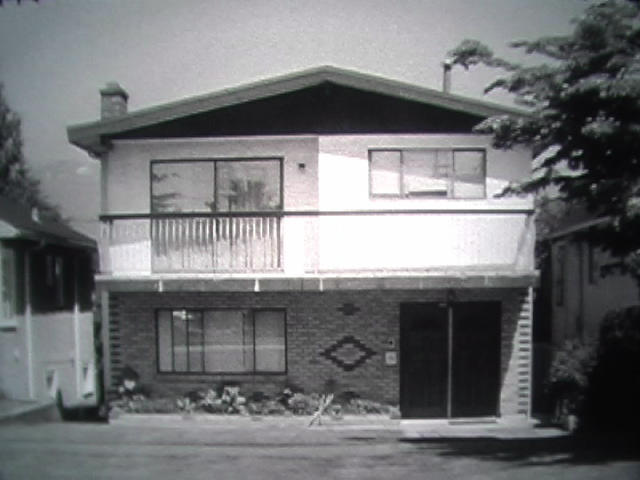
Vancouver Special
A "Vancouver Special"

Bourdieu is certainly no fan of the suburb, as he reveals in his discussion of suburban deprivation and
the statistically ordinary case of all those inhabitants of prefabricated houses in the so-called residential areas who, lured by the mirage of falsely "individual" housing (like the semi-detached houses on estates, which have almost all the same restrictions as a council flat), experience neither the solidarity of the old working-class districts, nor the isolation of the better-off areas: these people, who spend hours each day commuting to distant workplaces, are deprived of the relationships that formed within their neighbourhoods, particularly in and through trade union campaigns, without being able to create--in a place of residence where socially very homogeneous individuals are gathered together, but without the community of interests and affinities that ensue from belonging to the same world of work--the elective relationships of a leisure community. (189)
NB I think there's again something up with the translation here (surely "environs" would be better than "neighbourhoods" to describe the milieu of the workplace). There's also a strange romance of workplace solidarity of the most traditional kind, which ignores the displacement of these same communities and conflicts onto what Mario Tronti long ago termed "the social factory."

For what is suburbia if not the paradigmatic assembly line of twentieth-century modernity's social factory?

Thursday, July 28, 2005

embarrassment

I'm about a quarter of the way through Read's book. It does have some virtues, not least in retelling some of the early history of British Hispanism. Those were very much the days of the gentleman amateur, a continuation of the eighteenth-century "grand tour." Apparently the founding editor's contribution to the first issue of the Bulletin of Spanish Studies (in 1923) was entitled "Literary Pilgrimages in Spain" (20). I buy Read's argument that, at least in these heady days before the Spanish Civil War, the Northern Hispanist found in Spain "an organic, pre-individual, pre-capitalist community, comparable to the 'merrie England' of contemporary English critics such as F. R. Leavis, but in the case of Spain, refreshingly real, surviving, that is, into the 20th Century" (20).

Two points, however:

First, if academics are always torn between two fantasies, either of their vital importance as the new "unacknowledged legislators" of the world, or of their marginality and insignificance, mere spectators of the real theatre of power, Read insistently plumps for the first illusion over the other. His particular inflection is a Marxism of a fairly vulgar variety. Hispanism is endlessly found to act in the service of either capital or the state, often both. "Thrown into relief," for instance, "is Hispanism's ideological role in the (re)production of the whole social order" (14). Indeed he even presents the possibility that the fate of social reproduction is at stake in the choice of syllabus in specific courses: "the control of the content of Golden Age courses served the purposes of a conservative elite, anxious to defend the prevailing relations of production, just as surely as the superannuation of those courses is related to the need to expand the forces of production" (27). Moreover, the influence of the humble junior lecturer expanded far beyond the confines of national boundaries: "the traditional Hispanist . . . served the middle class in its capitalist exploitation of Third World Countries" (28). And in rather predictable vulgar Marxist fashion, the fact that the professoriat refuse to realize their true role in global oppression is the coup de grace of outraged critical dissection: "Needless to say," Read strangely feels the need to say about the above founder of the Bulletin of Spanish Studies, "it escaped his attention that the capitalist extraction of surplus value from workers involves a form of legalized robbery, that the freedom of these workers is constantly infringed by cut-throat managers, and that dominant classes have, throughout history, enjoyed a fuller life at the expense of those who serve them" (36).

Yes, there are moments when Read's excoriation of Hispanism invokes the second academic illusion, when he wishes to suggest that his forbears and colleagues were so dismal that they weren't even able to ensure the continuation of legalized robbery on the part of the British bourgeoisie. At these points, Hispanism turns out to be a "quietly conservative, marginal discipline" (26). Indeed, Read even contemplates the possibility that the Humanities in general may inadvertently resist capital expansion: "Their knowledge, over the ages, has generally been 'useless,' to the extent of holding back the development of the forces of production" (52). But the scare quotes around the word "useless" here indicate, I think, not so much that Read contests prevailing utilitarianism, as that he is reluctant to relinquish the notion that Hispanism must still somehow be a vital link in the chains of capitalist imperialism.

Second, Read's book is, well, embarrassing. Interleaved with his analyses of Hispanism as an institution are a series of autobiographical essays. One of these compares his own career with that of Paul Julian Smith (professor at Cambridge and probably the most prominent figure in contemporary British Hispanism). I haven't reached that chapter yet, but even the thought of it makes me wince. (Apparently Read writes about himself in the third person; which if anything makes it even worse.) It is very clear that Read has been advised multiple times to tone down his book, revise it, and make it less personal, less confessional, less full of.. well, of ressentiment. Read glosses Richard's Hoggart's famous description of the "scholarship boy" as characterized by "an unusual self-consciousness and tendency to self-dramatization" (38). This description seems to fit Read to a T. (Read, however, will claim that he is not even a scholarship boy, as he failed his eleven plus.) The book's acknowledgements refer to the fact that one of its constituent essays was essentially rejected by the Journal of Hispanic Cultural Studies, and also to the fact that the book as a whole "was submitted to Liverpool University Press, and held by it for several years, before being rejected on the grounds that the Press suddenly found itself 'over-committed'" (i). Further, the book's preface reports the reaction of a series of friends and colleagues who had read the manuscript: Michael Sprinker "was significantly guarded in his response" (iv) while other colleagues "obviously felt that I had gone over the top in terms of political rhetoric and ad hominem criticism. More painfully, others failed to respond at all, as if embarrassed by the whole enterprise" (v). Frankly, no wonder.

So what to say about such a book that a) is not clearly (and even more excruciatingly) anticipated within its own pages and b) is not, indeed, a class condemnation of the scholarship boy for not fitting in, for being gauche, for not living up to the decorum of academic convention?